Fort Cochin On The Malabar Coast During The Dutch Era, 1812 Print
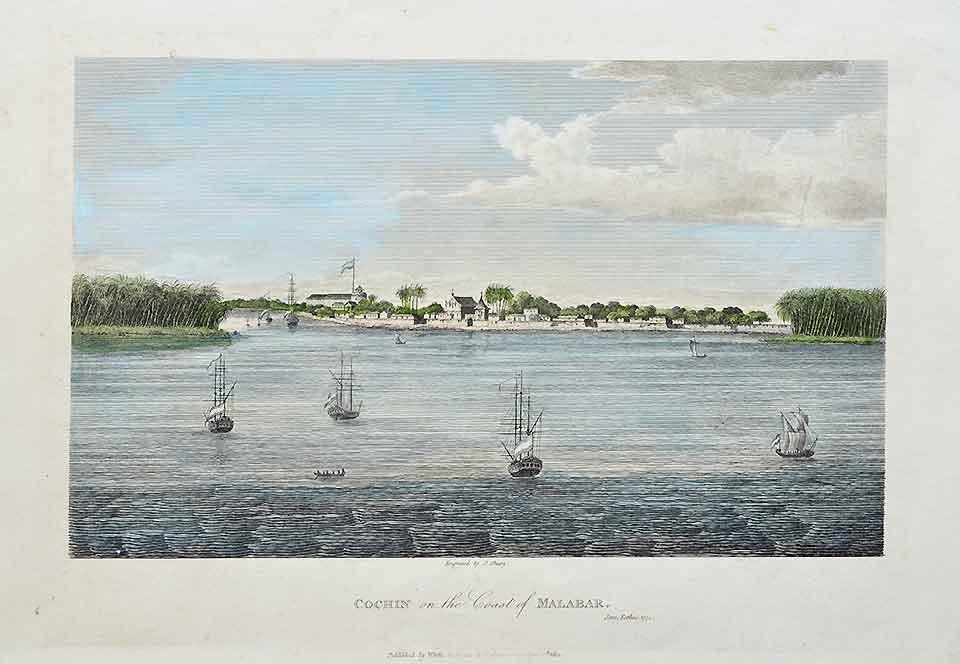
This appealing 1812 print of Fort Cochin (Kochi) offers a fascinating glimpse into India’s colonial spice ports on the Malabar Coast. Originally engraved in 1772, the artwork captures the once heavily fortified Dutch settlement, where imposing ramparts, elegant European buildings, and harbour reflected Cochin’s strategic and commercial importance. During the 17th and 18th centuries, control of Cochin meant control of a lucrative share of the spice trade, especially the prized black pepper that drew ambitious European powers from across the world. After more than a century of Dutch rule, the British seized Cochin in 1795, adding yet another chapter to the city’s remarkable colonial story.
The Portuguese became the first Europeans to reach India by sea when Vasco da Gama landed at Calicut (Kozhikode) in 1498, opening the famous maritime spice route between Europe and India. The enormous profits from pepper, cinnamon, and other exotic commodities soon transformed the Indian Ocean into a fiercely contested arena of empire. But following strained relations with the Zamorin of Calicut, the Portuguese shifted their attention southwards, and in 1500, Admiral Pedro Álvares Cabral established a permanent foothold at Cochin with the support of its local ruler. For more than 160 years, Cochin flourished as Portugal’s principal stronghold in India before the Dutch East India Company captured it in 1663. Click image to enlarge.
Did you know – Vasco Da Gama returned to Lisbon from Calicut in 1499; the crew was in bad shape as half of the men had died during this return voyage.