Vasco da Gama’s Pepper Trail To Calicut, The Voyage That Changed The World, 1900 Map
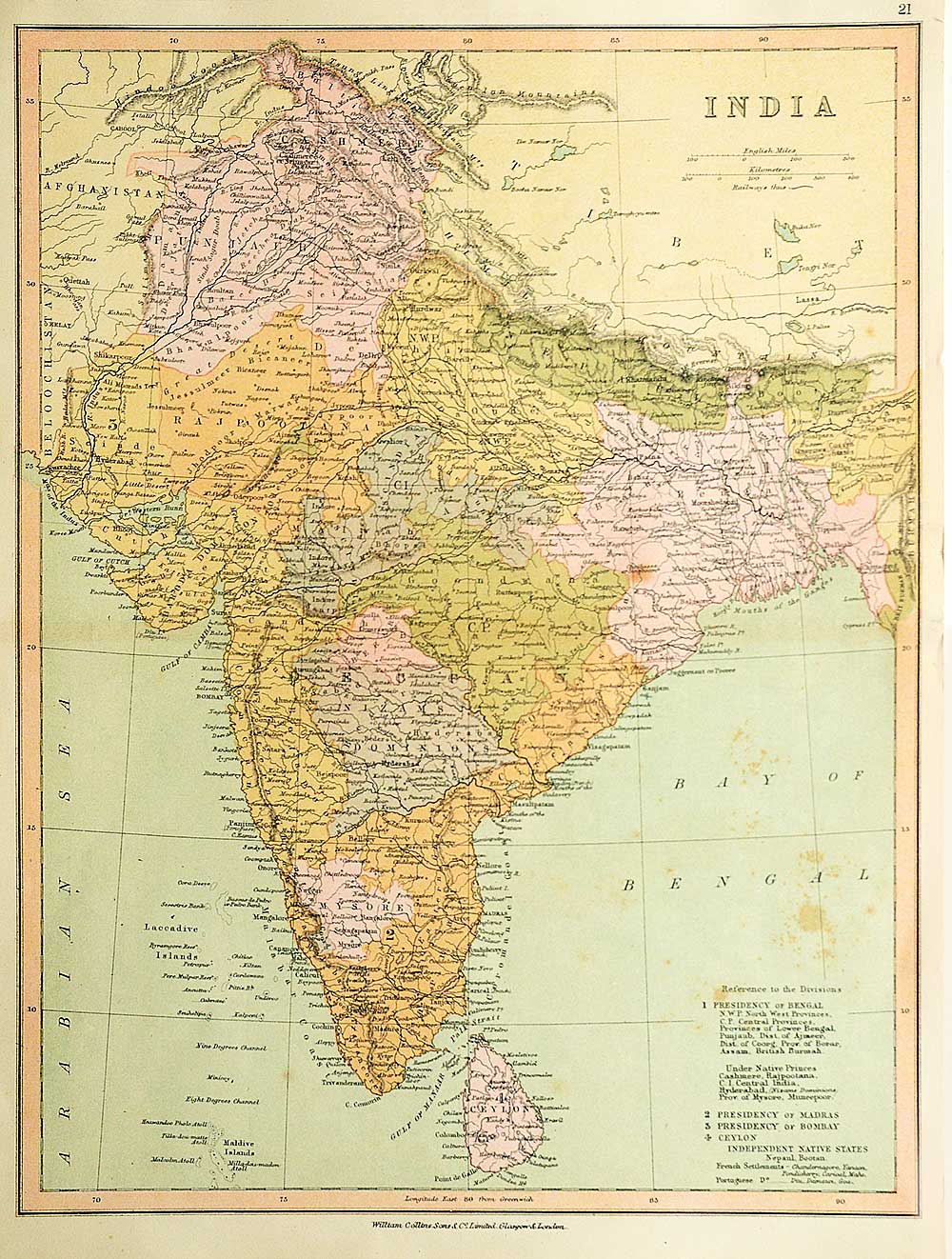
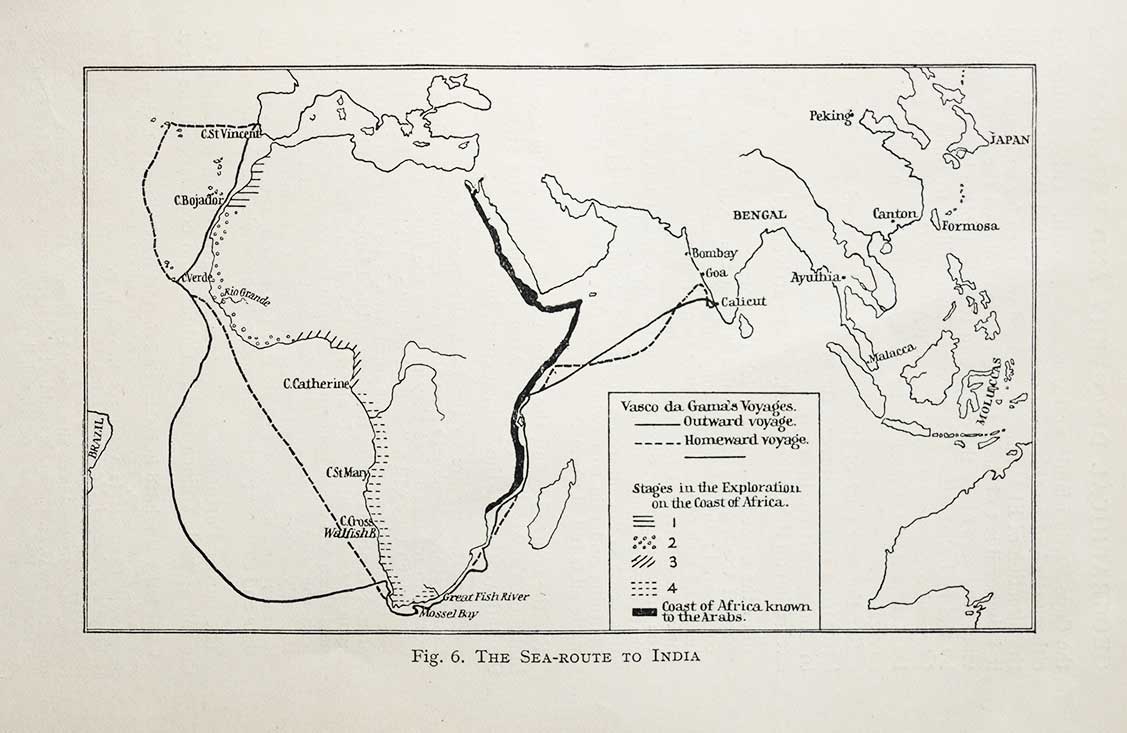
A 1900 map of Vasco da Gama’s pepper trail to Calicut, and the voyage that changed the world. Long before airplanes, steamships, or even the Suez Canal, reaching India from Europe meant a perilous journey around the southern tip of Africa. This historic map traces the remarkable voyage of Vasco da Gama, whose expedition between 1497 and 1499 established the first direct sea route from Europe to India. His arrival in Calicut (Kozhikode) on the Malabar Coast marked one of the greatest turning points in world history, forever altering global trade, exploration, and more.
At the heart of this extraordinary expedition was a humble commodity, black pepper. Often called “Black Gold”, pepper was among the most valuable spices in medieval Europe. It was prized not only as a spice but also for preserving food and as a symbol of wealth. Until Vasco da Gama’s voyage, Europe’s access to Indian spices depended largely on long and expensive overland routes controlled by Arab, Persian, Venetian, and Ottoman merchants. Portugal sought an alternative, hoping to reach India’s spice markets directly by sea.
Sailing from Lisbon, Vasco da Gama rounded the Cape of Good Hope. With the help of an experienced pilot from East Africa, his fleet crossed the Arabian Sea and reached Calicut in May 1498, then one of the busiest trading ports at the time. Merchants from Arabia, Persia, China, and Southeast Asia had already been trading there, making the city an international commercial hub centuries before European colonial rule.
Although Vasco da Gama’s first visit achieved only modest commercial success, it proved beyond doubt that a direct maritime connection between Europe and India was possible. This breakthrough enabled Portugal to establish a vast trading empire across the Indian Ocean. In the decades that followed, Portuguese forts and trading posts appeared along the coasts of Africa, India, and Southeast Asia, reshaping maritime commerce for centuries.
The map also illustrates the outward and homeward routes, revealing the enormous distances sailors endured. Storms, disease, hostile seas, and months without fresh supplies claimed many lives. Yet the expedition demonstrated remarkable navigational skill and determination, paving the way for future European exploration of Asia. Click image to enlarge.
Did you know – in medieval Europe, black pepper was so valuable that it was sometimes accepted as payment for taxes, rent, and even dowries.