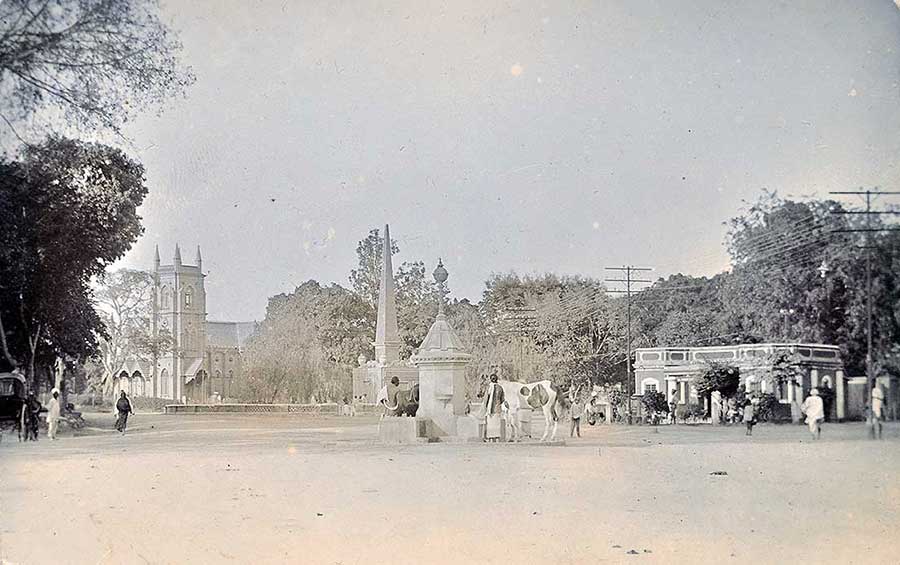
The Colonial Cenotaph That Once Stood in Bangalore, 1910 Photo
A rare 1910 photograph of the colonial cenotaph memorial that once stood in Bangalore (Bengaluru). Before Bangalore’s fast-moving traffic and modern skyline transformed Hudson Circle (Corporation Circle or N. R. Square). The junction was home to one of the city’s interesting colonial landmarks, the Bangalore Cenotaph Memorial. This now-demolished monument stood as a stark reminder of colonial military history in the city.
Located right opposite the Hudson Memorial Church. The memorial obelisk was erected sometime in the first quarter of the 19th Century. To commemorate Indian and British soldiers who died in the 1791 Siege of Bangalore during the Anglo-Mysore Wars, when Lord Cornwallis’s forces captured Tipu Sultan’s Bangalore Fort. The cenotaph became a familiar yet increasingly controversial feature of Bangalore’s urban landscape.
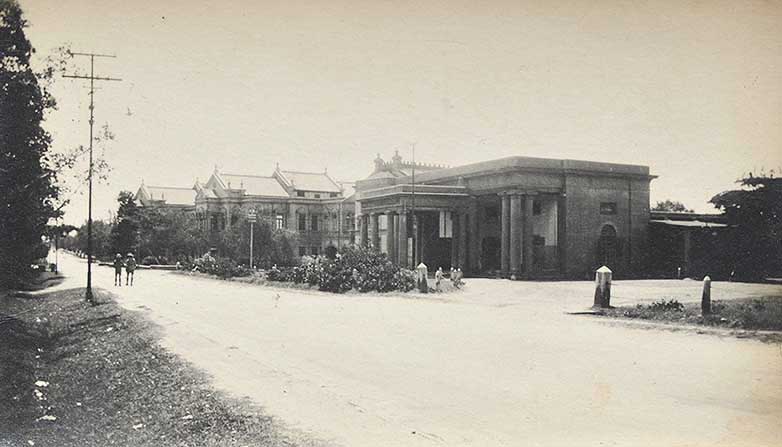
For decades, the Bangalore Cenotaph remained a recognizable landmark, lending the surrounding road its historic name, Cenotaph Road (now Nrupathunga Road). The old photograph reveals an almost unrecognizable cityscape, with broad and unhurried roads. The Cenotaph can be seen between the Hudson Memorial Church and a typical colonial cantonment residence. In the center is another smaller unidentified structure, a horse, and some people standing around it.
Yet as India’s post-independence identity evolved, monuments celebrating colonial conquest came under renewed scrutiny in Bangalore. In 1964, the cenotaph was demolished, marking the end of a chapter in the city’s imperial-era streetscape. Today, only a few residents realize that one of Bengaluru’s busiest junctions once hosted a memorial tied to the Indian and British soldiers who died in the 3rd Anglo-Mysore War. Click image to enlarge.
Did you know – local activist Vatal Nagaraj, who was at the forefront of the fight to have the cenotaph razed. And in its place, Kempe Gowda’s statue was installed.