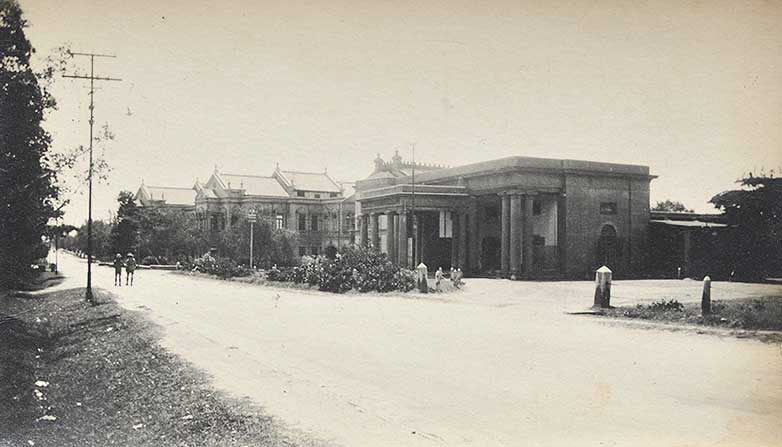
Glimpse of Bangalore Cantonment Life During British Era, 1900 Photo
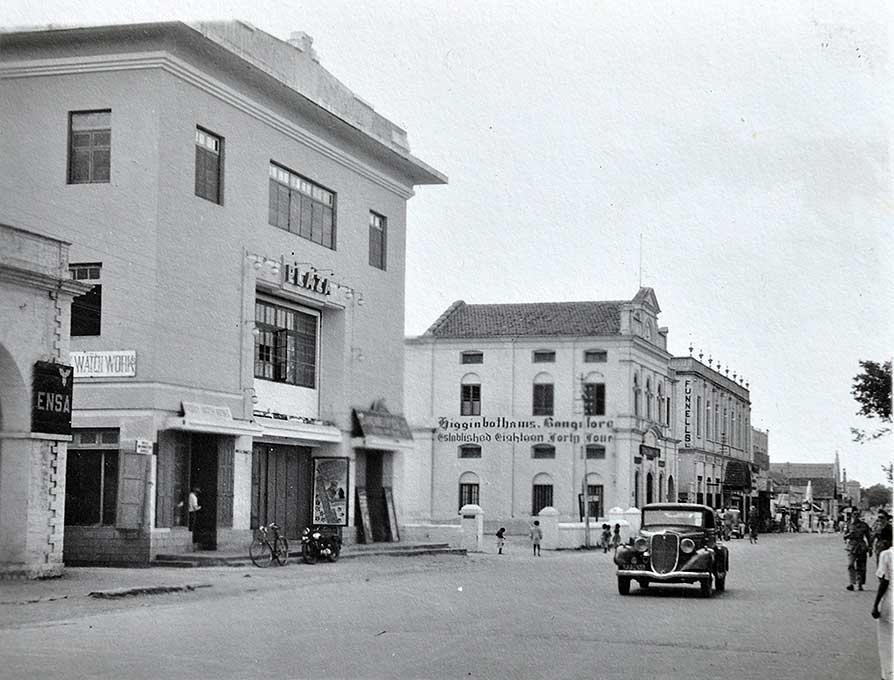
A 1900 photograph offers a fascinating glimpse into everyday life in the Bangalore Cantonment during the British era in India. Two British officers can be seen in front of a row of buildings in this small photo. During the colonial period, Bangalore was effectively two adjoining towns with distinct administrations, cultures, and urban layouts: the Pete or Pettah (town) and the Cantonment.
The Cantonment was a distinctly European enclave, planned, orderly, and shaped by typical colonial amenities. Wide roads, telegraph poles, and neatly spaced buildings defined the landscape. The Pete was an indigenous part of Bangalore, founded by Kempe Gowda I in 1537. It grew around a mud fort (later Bangalore Fort) and was organized into market quarters. Names like Chickpet, Balepet, Akkipet, Cottonpet, Nagarthpet, and so on, still reflect this.
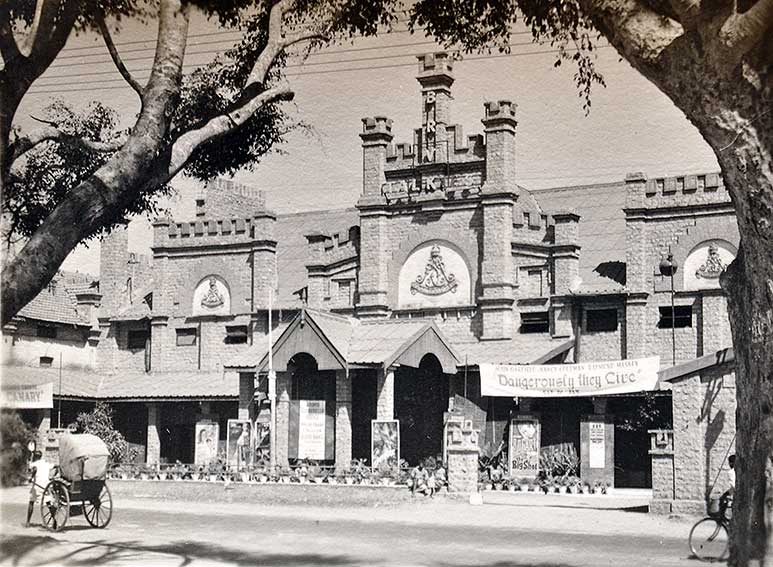
Bangalore Cantonment in the early 20th century was a vibrant hub of military, social, and commercial activity. It housed barracks, clubs, churches, and bungalows surrounded by gardens. Horse-drawn carriages and early forms of transport dominated the roads, while native workers and European residents coexisted within a structured colonial hierarchy.
Many of these colonial buildings, though weathered by more than a century of change, still stand today in areas like Cubbon Park, MG Road (formerly South Parade Road), and Richmond Town. Being quiet witnesses to Bangalore’s transformation from a colonial garrison town into the bustling metropolis it is now. Click image to enlarge.
Did you know – roads were often named after British officers and regiments, like Brigade Road and Residency Road, which still exist today as some of Bengaluru’s busiest streets.