
The Cochin State Forest Tramway, A Forgotten Railway in The Jungle, 1910 Newspaper
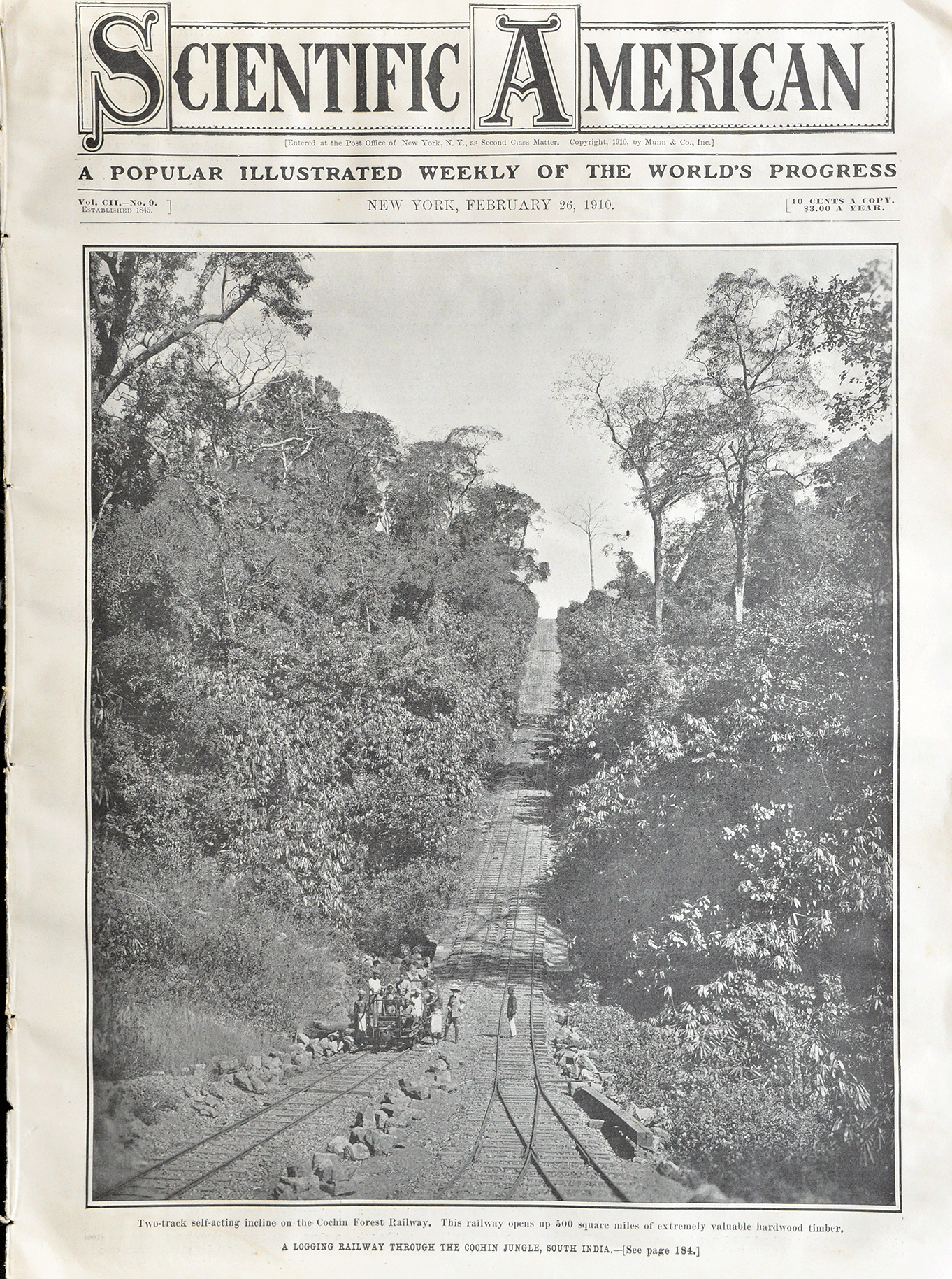
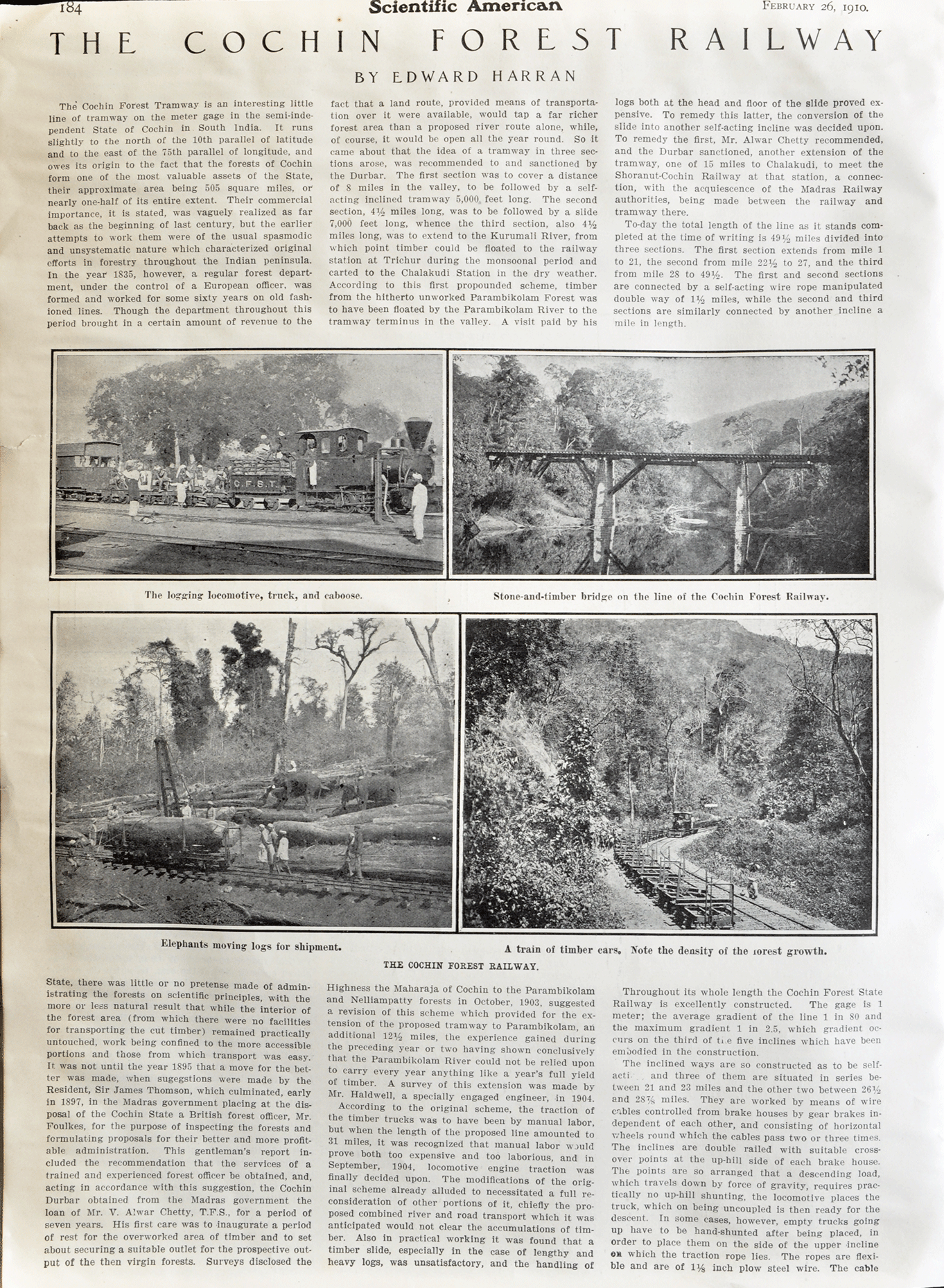
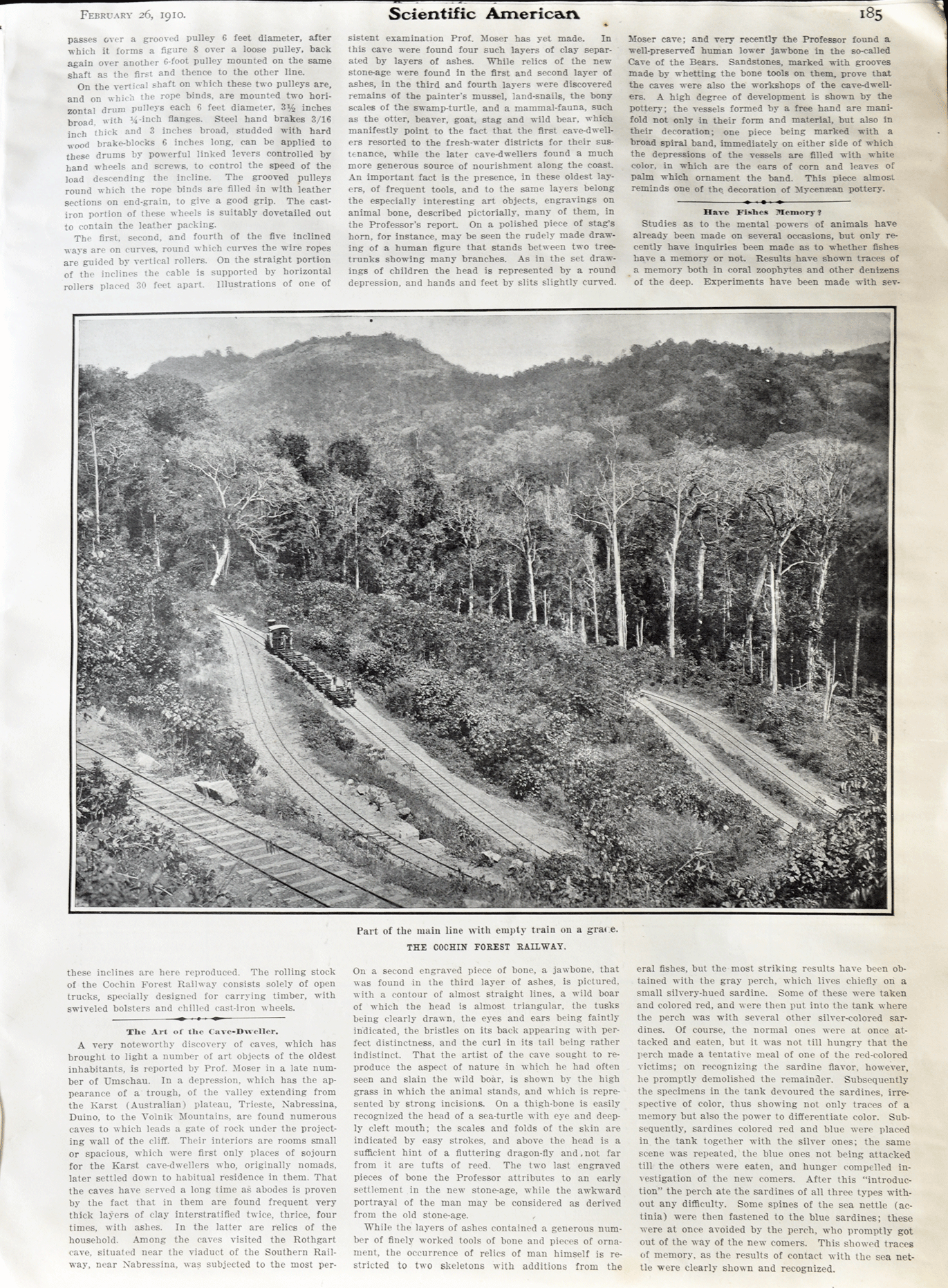
A rare Scientific American newspaper, from 1910, features the Cochin State Forest Tramway. A now-forgotten railway that had once operated in the jungles of Cochin State. Hidden deep within the jungles of present-day Kerala once ran one of India’s most remarkable engineering achievements—the Cochin State Forest Tramway.
Built during the British era for the princely State of Cochin. This extraordinary narrow-gauge railway was never intended to carry passengers. Instead, its sole purpose was to transport gigantic teak, rosewood, ebony, and other valuable hardwood logs. From the dense forests of Parambikulam to the timber depots at Chalakudy. From there, the timber continued by rail and backwaters to Cochin. It supplied the timber locally, but mainly exported to markets across the British Empire.
Opened in 1907 after construction began in 1905. The tramway stretched nearly 80 kilometres, making it one of the longest and most ambitious forest tramways ever built in India.
Engineers carved its alignment through some of the most difficult terrain in southern India, constructing hundreds of bridges, culverts, retaining walls, and embankments. On the steepest sections, gravity and cable-operated inclines were cleverly used to lower heavily loaded timber wagons while pulling empty wagons back uphill, reducing the need for locomotive power. Small but powerful steam locomotives hauled the trains across valleys and through the jungle, where elephants often assisted in dragging freshly felled logs to loading points. The railway became the backbone of Cochin State’s flourishing timber industry, opening vast forest areas that had previously been inaccessible.
The revenue generated from these forests contributed significantly to the economic growth of the princely state. The line featured numerous timber trestle bridges, sharp curves, steep gradients, and ingenious mechanical systems designed specifically for mountain logging operations.
By the mid-twentieth century, however, changing technology and expanding road networks began to replace the railway. Motor lorries offered greater flexibility and lower operating costs, gradually making the forest tramway uneconomical. After serving the forests of Cochin for more than five decades, the line was officially closed in 1963. Today, only scattered bridge foundations, embankments, culverts, and portions of the tracks survive. Click image to enlarge.
Did you know – some sections relied on gravity rather than locomotive power. Allowing loaded wagons to roll downhill under controlled braking.