19th-Century North Indian Folk Painting of Raja & Rani
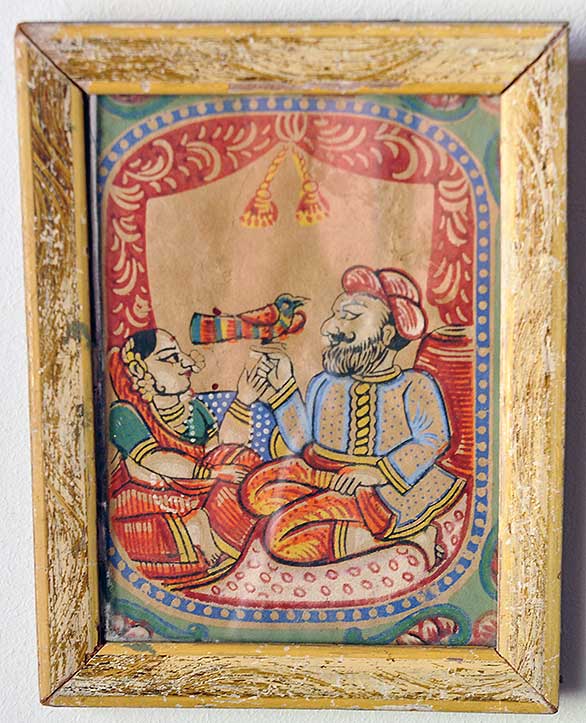
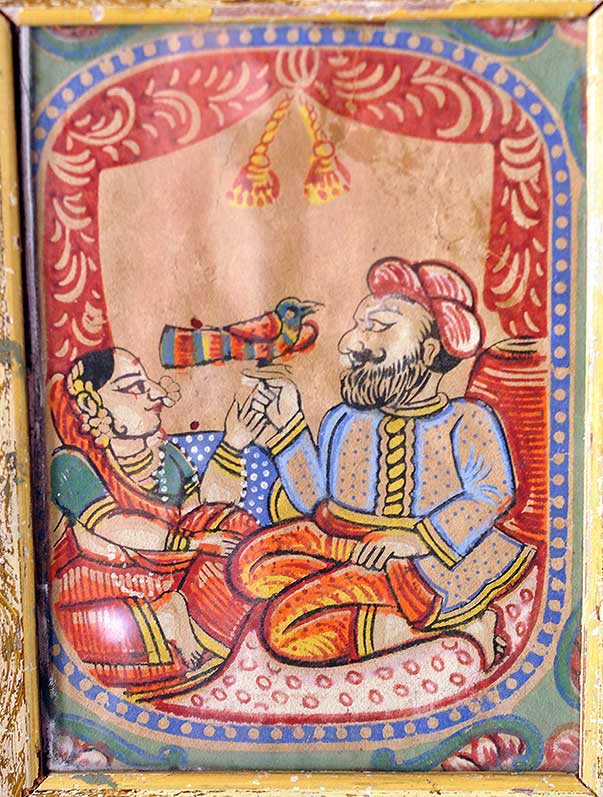
This delightful 19th-century North Indian folk painting captures an intimate moment between a Raja and his Rani, making it a beautiful example of India’s rich artistic heritage. Executed in the traditional miniature-inspired folk style, the artwork most likely originated from Rajasthan or neighbouring regions of North India, where such romantic courtly scenes were especially popular.
The royal couple is portrayed in elegant attire—the Raja wearing a distinctive turban and the Rani adorned in graceful jewellery and flowing garments, probably a sari—while a vividly coloured bird, maybe a parrot, perches nearby, adding both visual charm and symbolic meaning. Enclosed within an ornate floral border and painted in striking shades of red, blue, green, and yellow, the composition reflects the bold yet refined aesthetics that made Indian folk paintings so enduring.
Beyond its decorative appeal, the painting is rich in symbolism. In Indian art, the parrot has long represented love, fidelity, and companionship, and frequently appears as a messenger between lovers in classical poetry and miniature paintings. Painted on paper using natural pigments and preserved behind glass, this nostalgic work offers a fascinating window into the artistic tastes of affluent homes and havelis during the late 19th century. Today, it stands as a wonderful reminder of India’s timeless storytelling traditions expressed through art.
Did you know- many traditional Indian miniature and folk paintings relied on pigments derived from minerals, plants, flowers, and even precious stones. These natural colours have survived for well over a century, and have remarkable vibrancy even today.