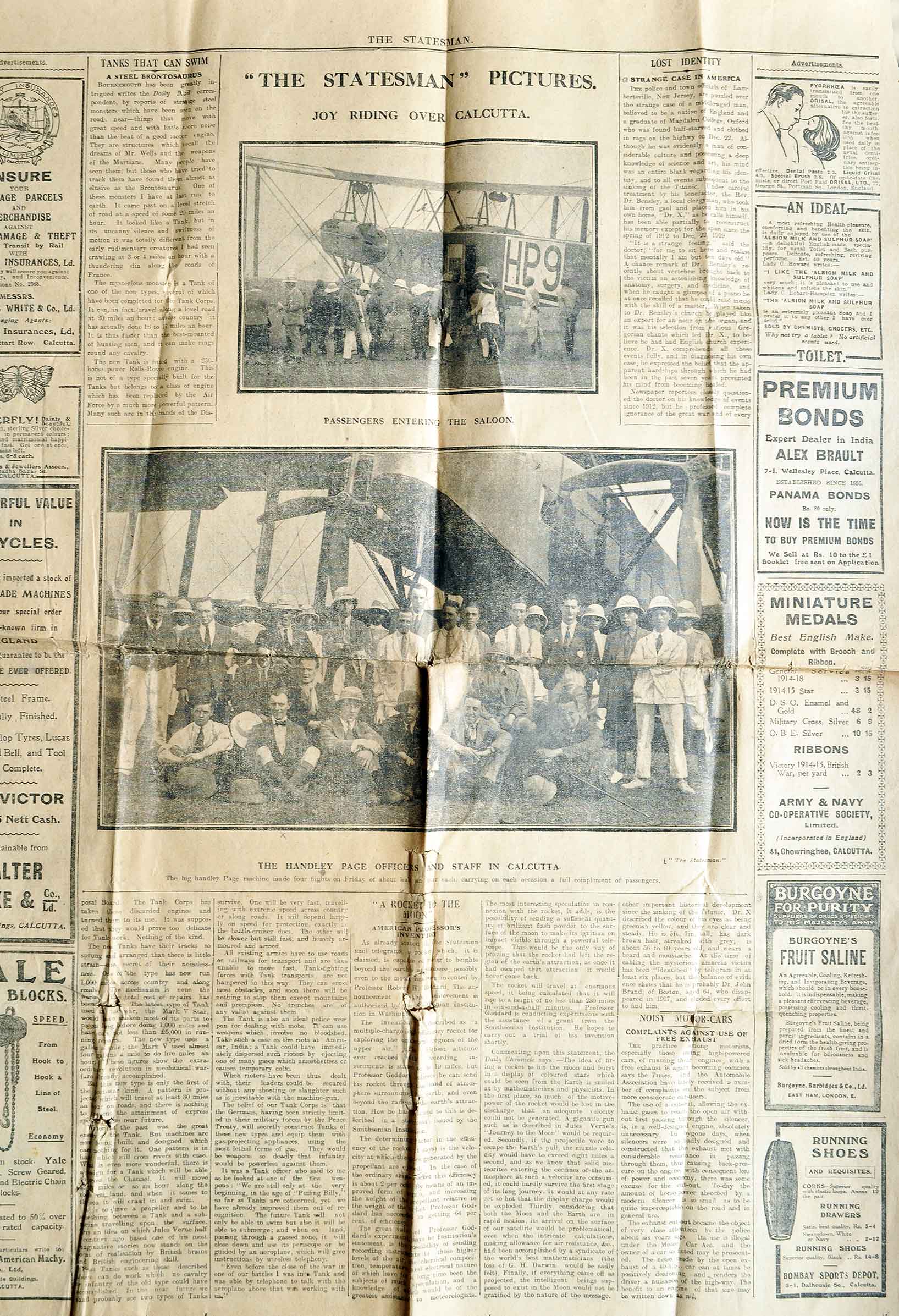
British Era Biplane: The Beginning of Commercial Aviation in India, 1920 Newspaper Page
Handley Page was attempting to establish a commercial aviation business in India after WWI. Its ambitious plan was to operate passenger and airmail service, initially connecting Calcutta (Kolkata) and Bombay, with the possibility of expanding the network. The aircraft was assembled at the Calcutta racecourse, which served as an aviation ground at the time.
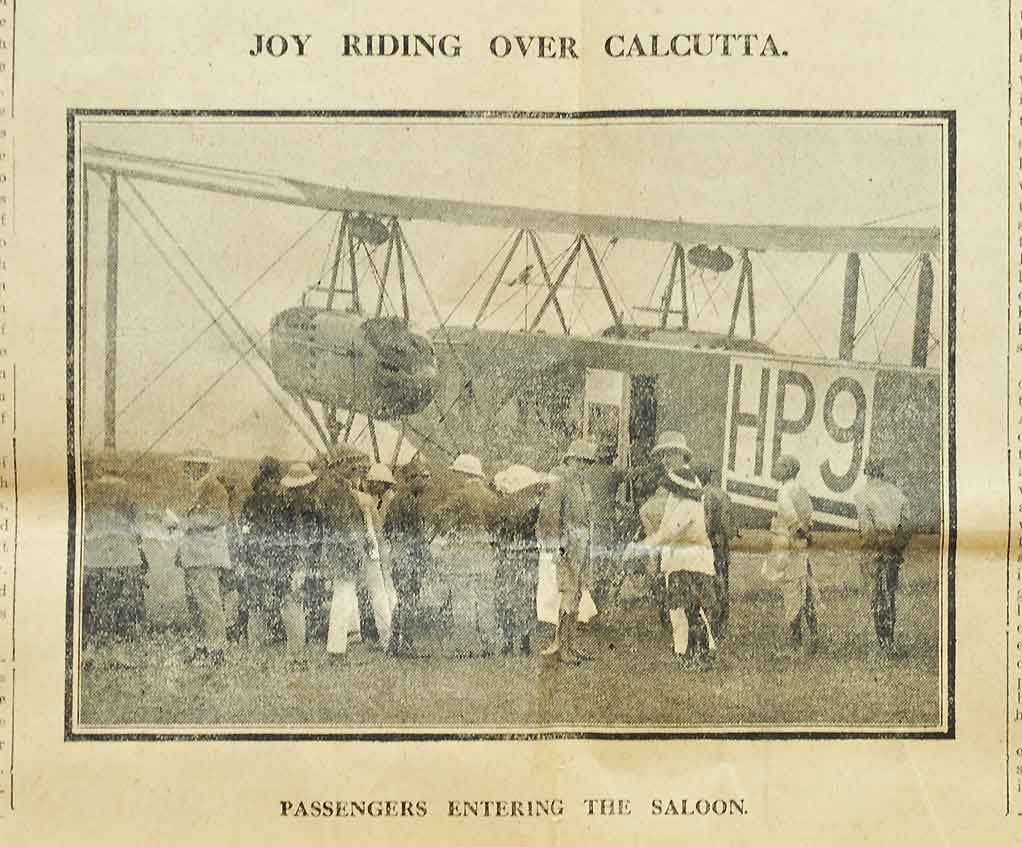
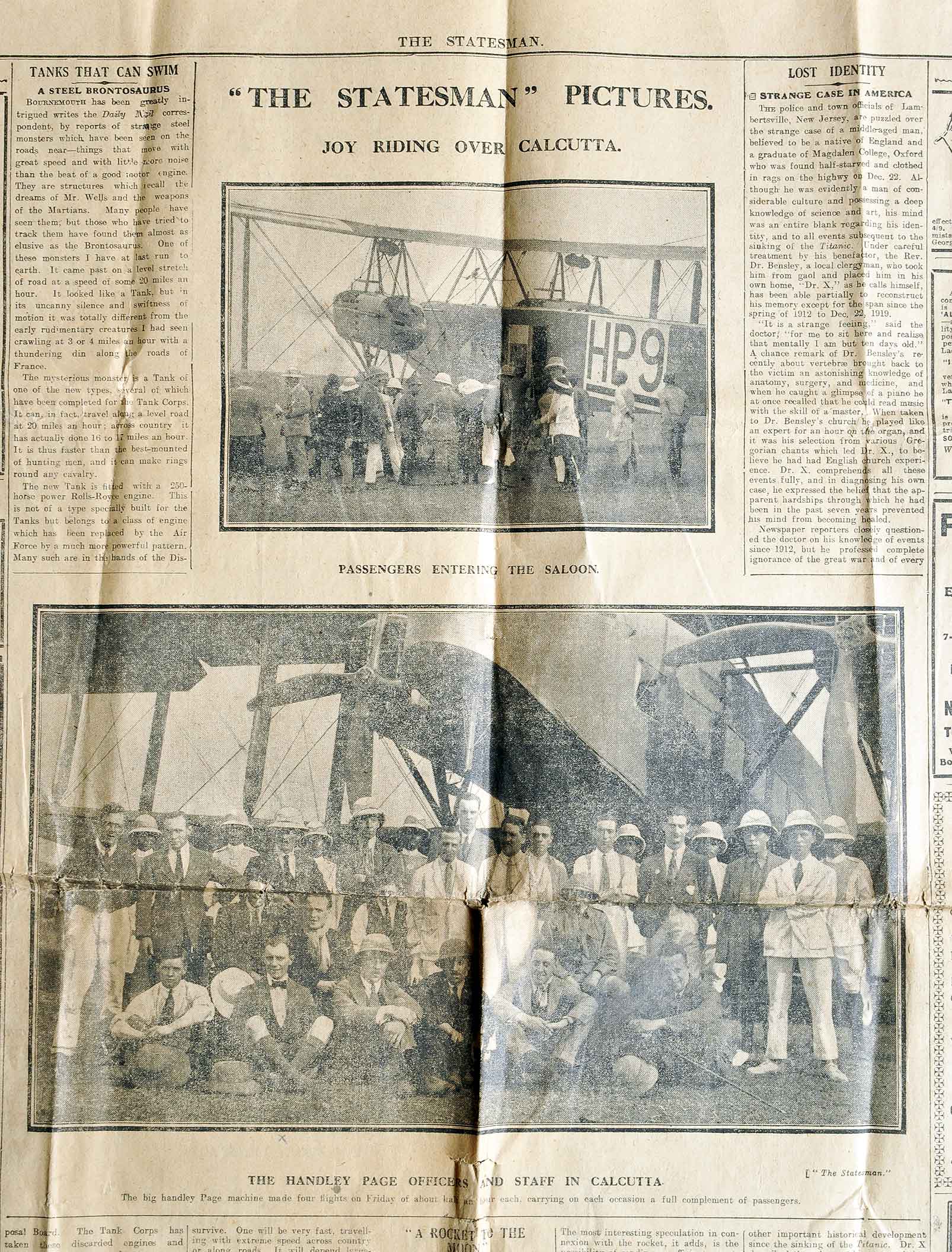
On 5 March 1920, Captain Clarke flew G-IAAB from Calcutta to Bombay (Mumbai), covering the journey in approximately 17 hours of flying time. The aircraft carried three crew members, three passengers and three journalists. The newspaper’s headline reads: “Joy Riding Over Calcutta.” The accompanying picture is captioned: “Passengers Entering the Saloon.”
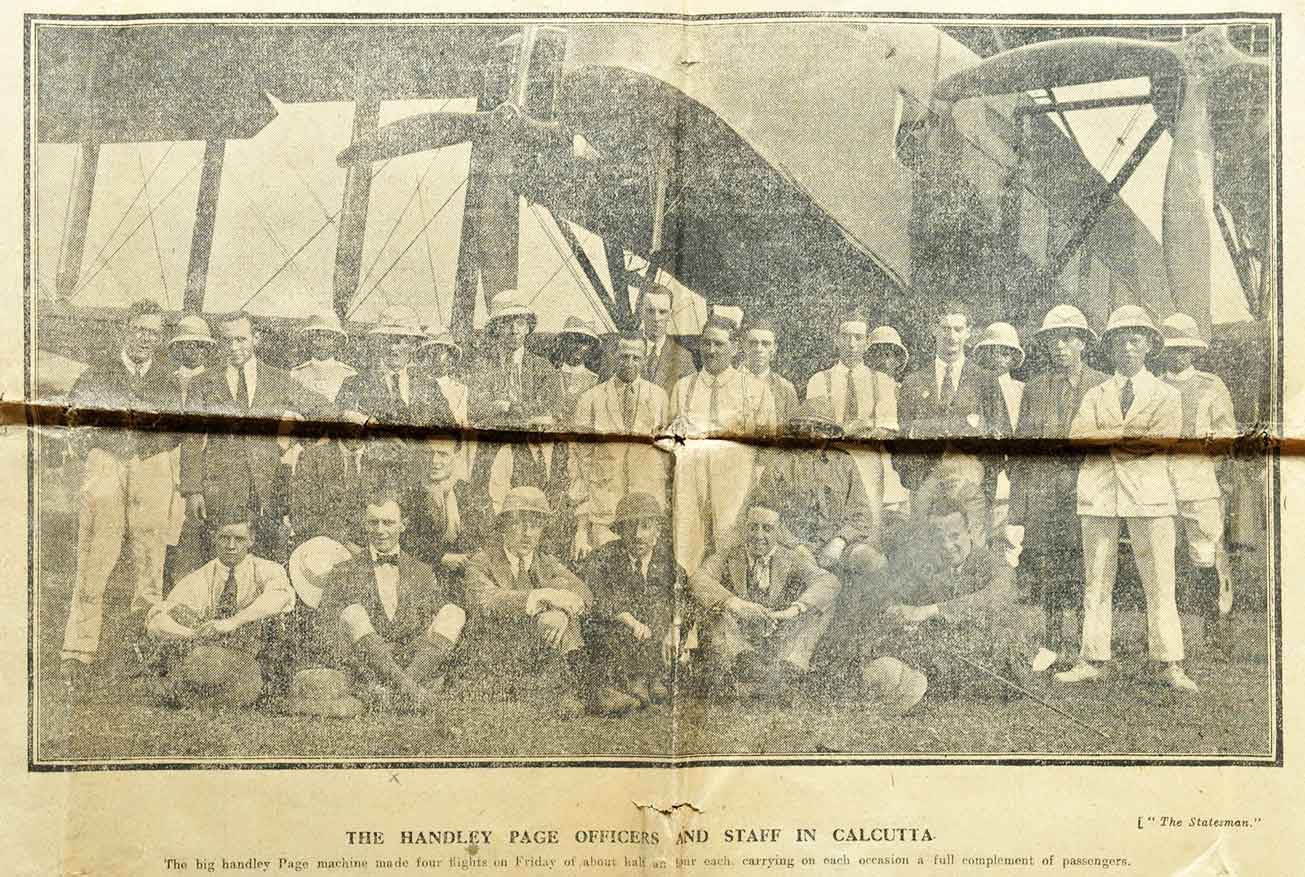
This is significant because the aircraft had been converted from a military aircraft into a passenger-carrying machine. Its enclosed passenger compartment was known as the saloon. The caption beneath the large photograph reads: The big Handley Page machine made four flights on Friday of about half an hour each, carrying on each occasion a full complement of passengers. This suggests that the aircraft was conducting organised passenger demonstration flights over Calcutta, rather than simply making a sightseeing appearance.
Four flights, each lasting approximately 30 minutes, also indicate considerable public interest in this new form of transport. The second picture is captioned: “The Handley Page Officers and Staff in Calcutta.” This is useful evidence of the company’s presence in the city and its efforts to establish an aviation operation there.
The demonstrations were surprisingly successful. According to aviation historian C. H. Barnes’s account in Handley Page Aircraft Since 1907:
- During the first two months of demonstrations in Calcutta and Bombay, more than 1,400 passengers were carried.
- Passengers included senior naval and military officers and several Indian rulers.
- One notable passenger was Sir Waghji Ravaji, the Thakur Saheb of Morvi, who became an enthusiastic supporter of aviation after experiencing a flight.
These were remarkable figures for commercial aviation in India in 1920.
Did you know- the Handley Page HP-9 (O/7) was part of an ambitious attempt to establish commercial passenger aviation in British India. Unfortunately, the venture did not last long. Within two years of its establishment, the company’s Indian operations came to an end.