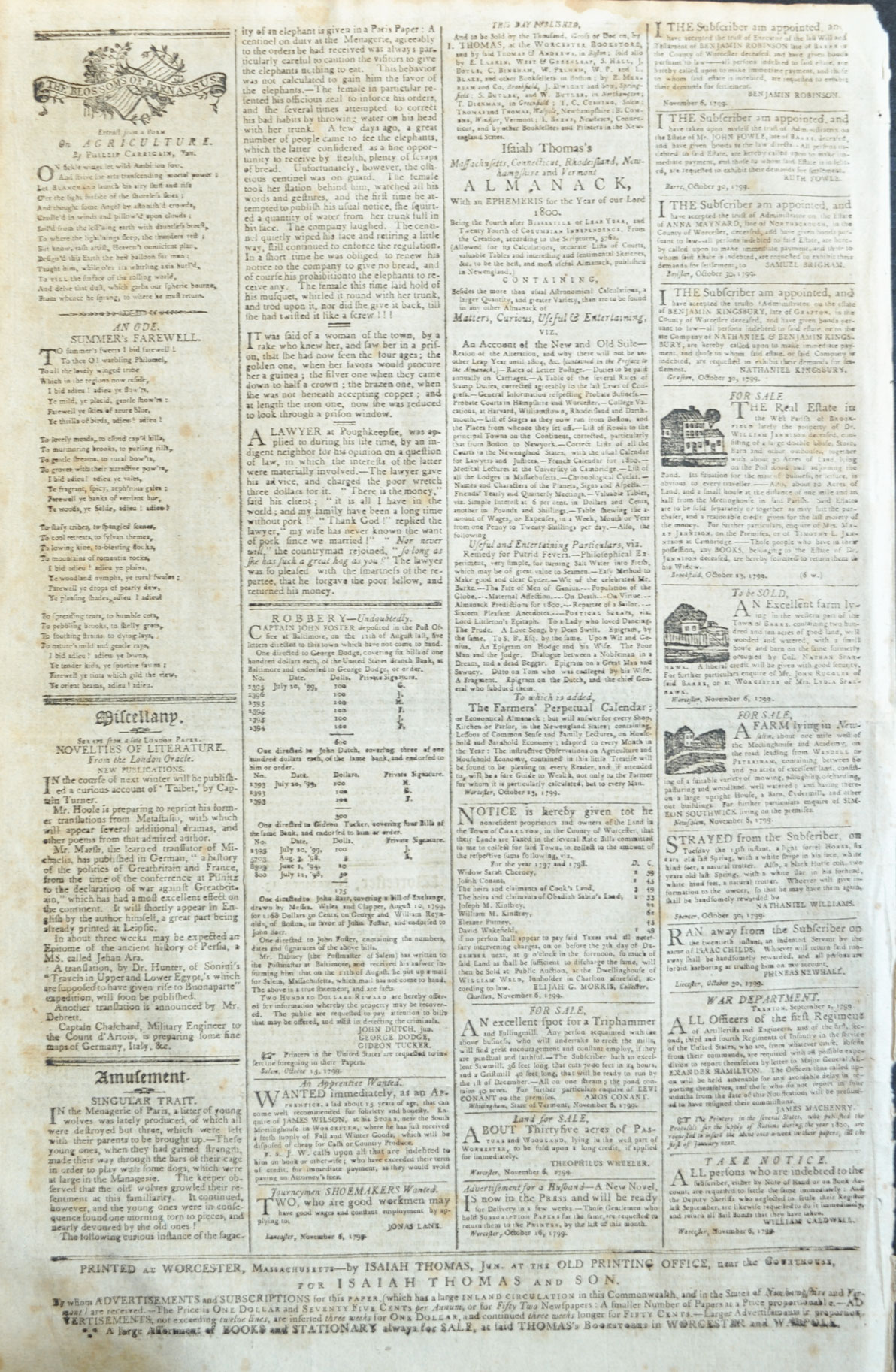
A 1799 Newspaper Report On The 4th Anglo-Mysore War & Tipu Sultan’s Death

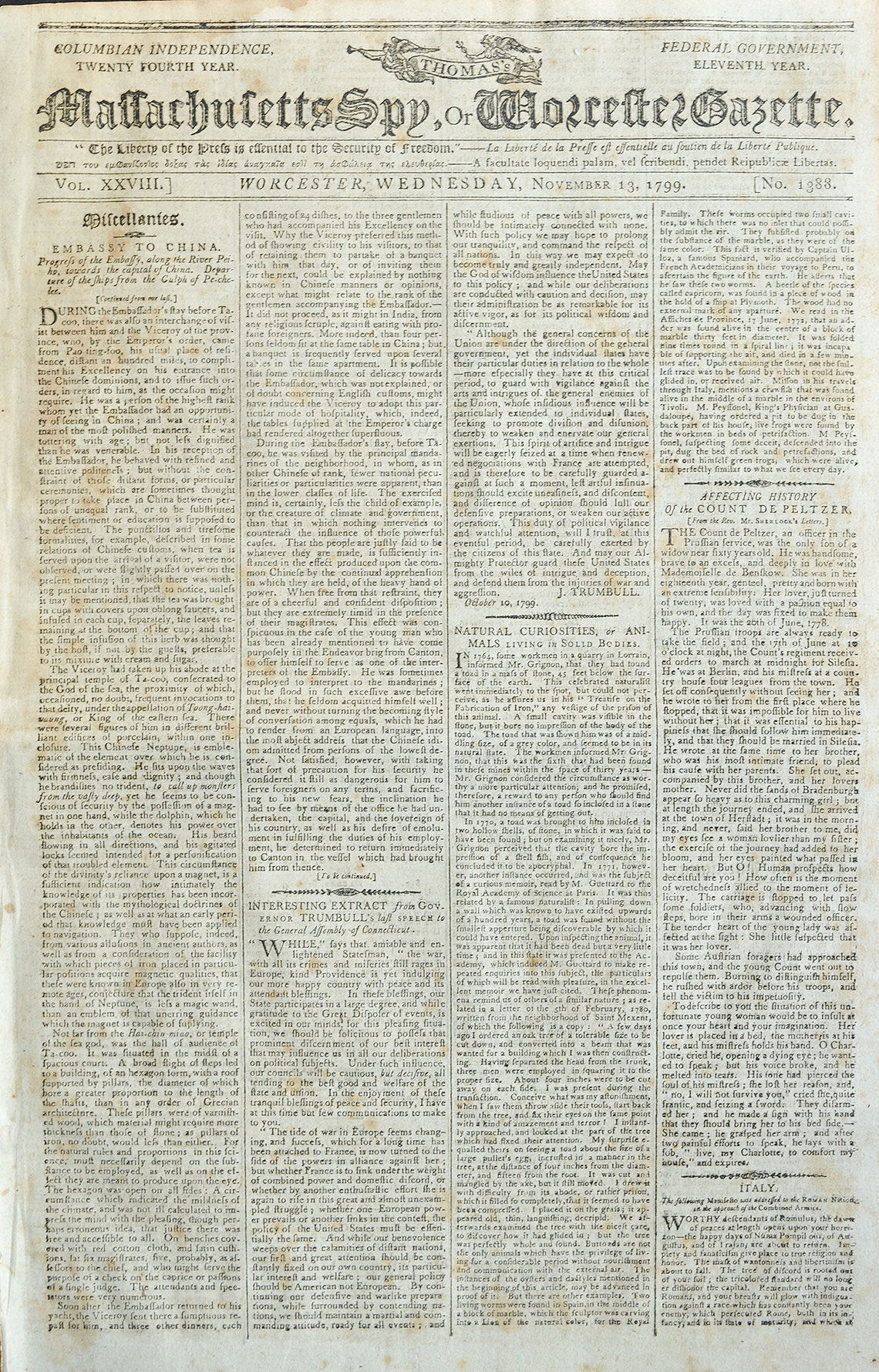
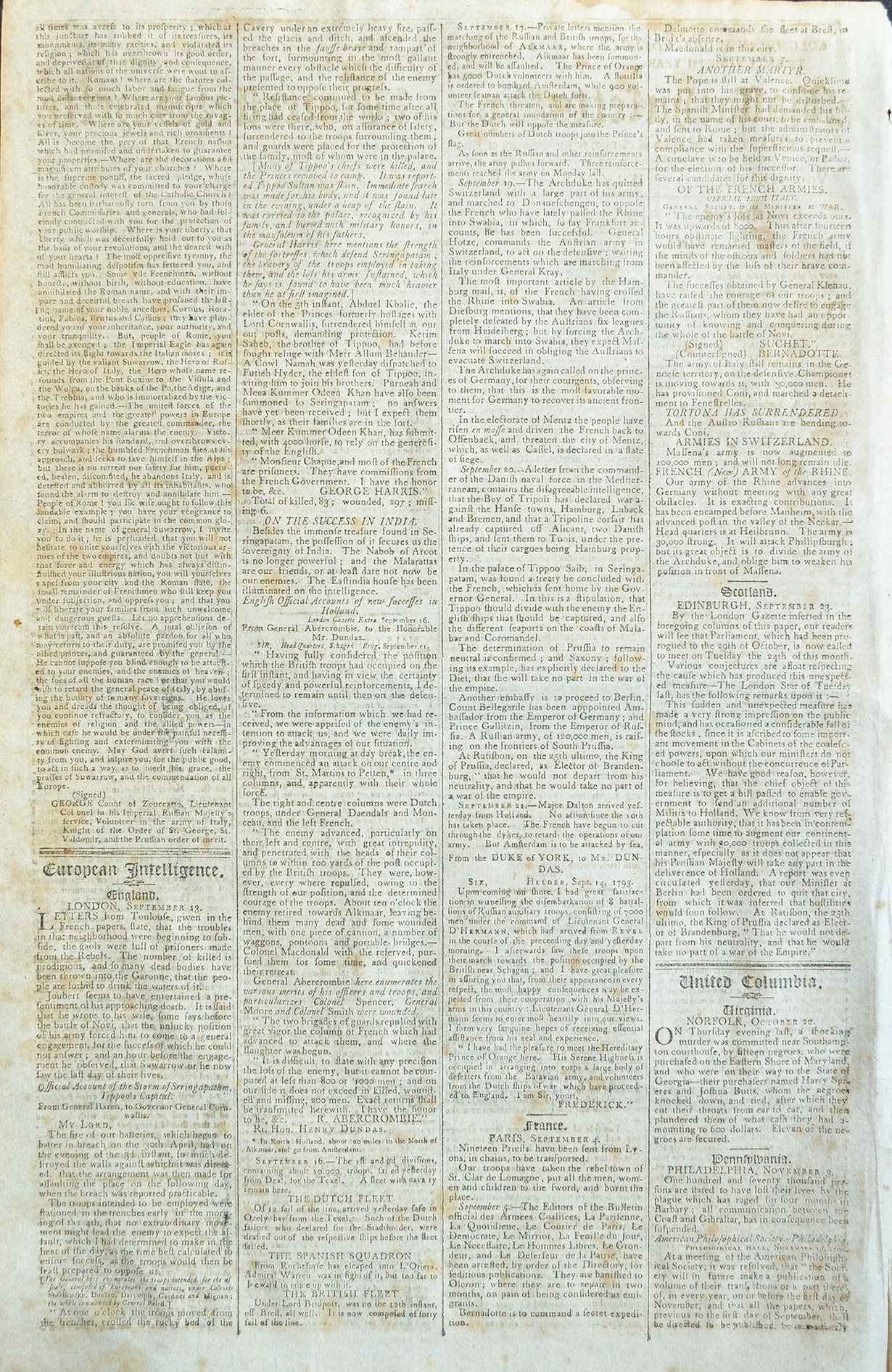
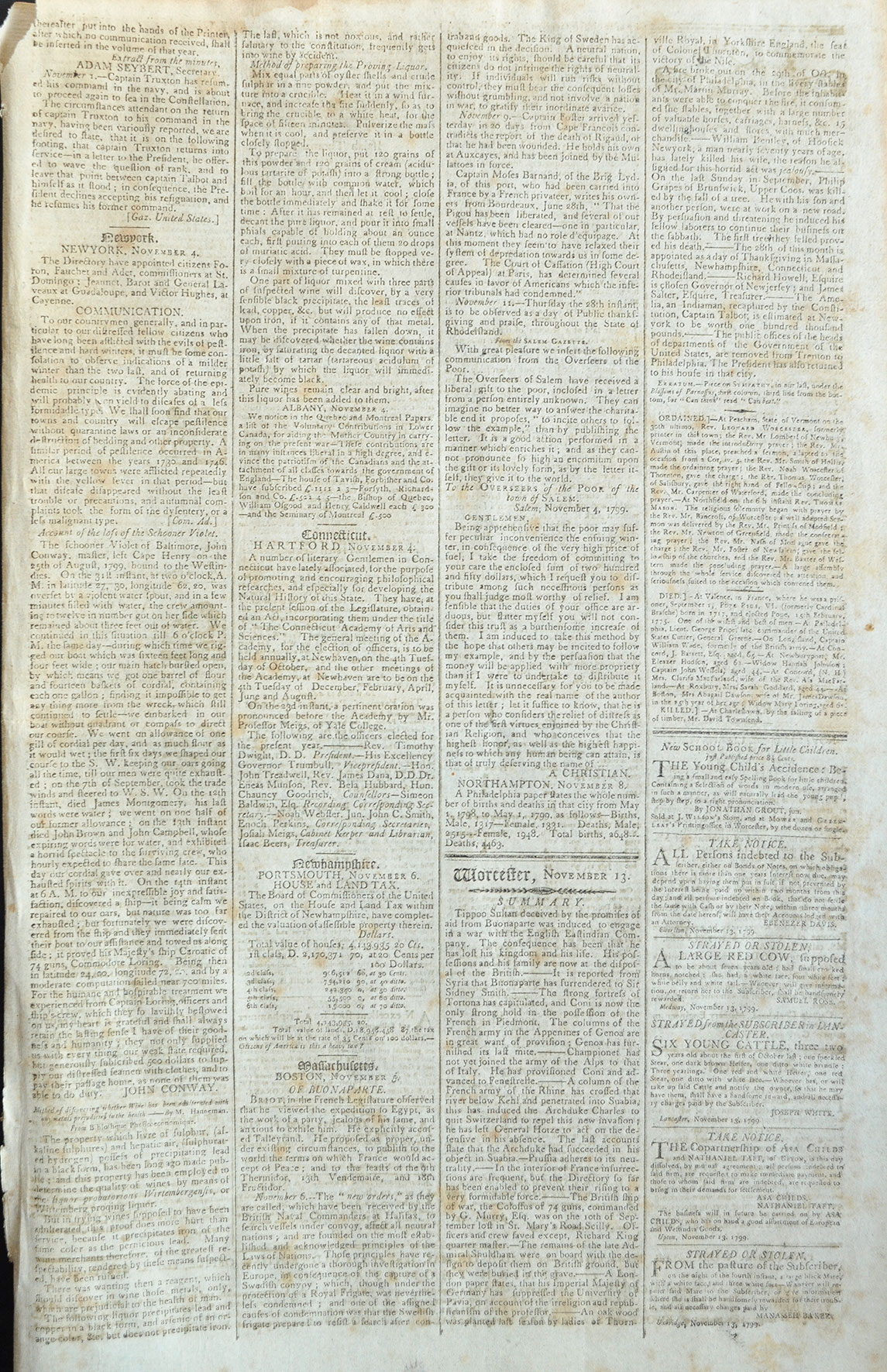
A rare 1799 American newspaper preserves an account of the 4th Anglo-Mysore War, the fall of Seringapatam, and the death of Tipu Sultan. This is particularly interesting because the newspaper was printed in Worcester, Massachusetts (USA), on November 13, 1799, only about six months after the fall of Seringapatam and Tipu Sultan’s death on May 4, 1799. This historic time capsule reproduces accounts of the British assault on Seringapatam, Tipu Sultan’s fortified capital, including a report attributed to General George Harris, the British commander who led the forces during the siege.
The account describes the breach of Seringapatam’s defences, the storming of the fortress, and the resistance encountered by the attacking troops. After the fighting had subsided, two of Tipu Sultan’s sons surrendered after receiving assurances of safety, while guards were placed around the royal family, many of whom remained in the palace. Tipu himself was initially reported missing. A search was undertaken, and his body was eventually discovered late in the day beneath a heap of the dead. His family identified him, after which his remains were carried to the palace and buried with military honours in the mausoleum of his father, Sultan Hyder Ali. The fall of Seringapatam ended the 4th Anglo-Mysore War and marked a major shift in the political balance of Southern India. The newspaper also reflects contemporary British claims about the wider significance of the victory, including the weakening of Mysore and the expansion of British influence in India.
Did you know – for a foreign newspaper, especially an American one, such detailed news from India so soon after the events is noteworthy, offering a glimpse into how reports of the British campaigns in India travelled across the Atlantic.