The Cave of Elephanta, Bombay’s Ancient Wonder, 1837 Print

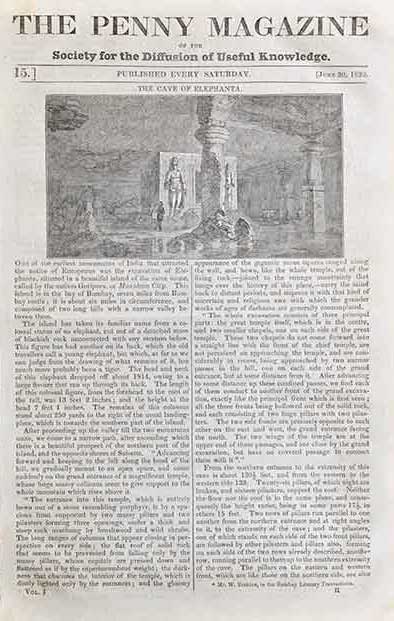
A rare page from a London periodical, The Penny Magazine of 1837, featured the article ” The Cave of Elephanta“. Long before photography became commonplace, readers in England discovered India’s architectural marvels through illustrated periodicals such as The Penny Magazine. The Penny Magazine was published in London and ran for 13 years, from 1832 to 1845.
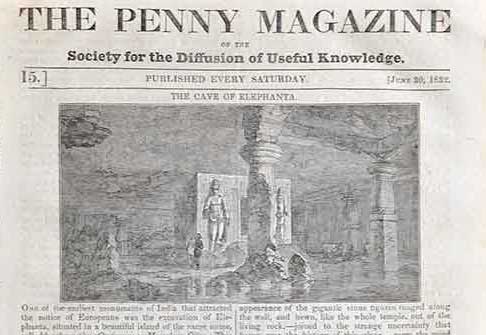
One such issue, published in 1837, featured “The Cave of Elephanta,” from which this page is taken, introducing Victorian readers to one of Bombay’s most extraordinary monuments. Accompanied by a finely engraved illustration of the great pillared hall, the article described the immense rock-cut temple with a sense of awe. Portraying its towering columns, colossal sculptures, and mysterious atmosphere. Bombay was emerging as one of the British Empire’s most important ports. The caves of Elephanta stood as tangible evidence of India’s sophisticated artistic and architectural heritage, astonishing visitors who struggled to comprehend how such a monument had been carved from solid basalt centuries earlier.
The magazine’s account reflects the fascination of 19th-century travellers who viewed Elephanta as an archaeological treasure and an enduring mystery. It marvelled at the immense cave supported by rows of massive pillars and adorned with monumental carvings dedicated chiefly to Lord Shiva. Modern archaeology has since established that the principal caves were created between the 5th and 7th centuries CE. This 1837 article remains an invaluable historical record in its own right, capturing how colonial-era audiences first encountered and interpreted one of India’s greatest rock-cut temples. Today, the Elephanta Caves continue to attract visitors from around the world. Standing not only as a UNESCO World Heritage Site but also as a reminder of the enduring admiration they inspired nearly two centuries ago.
Did you know – this article appeared nearly 50 years before archaeological authorities formally protected the Elephanta Caves.