
Shahjahanabad: Panoramic View of New & Old Delhi, 1860 Print
This 1860 engraving of Delhi presents a remarkable panoramic view of the city during one of the most significant periods in its history. The ruins of earlier Delhi (Old Delhi) lie in the distance on the left, while Shahjahanabad (the newest city), the walled city, dominates the landscape. Founded in 1648 by the Mughal emperor Shah Jahan, Shahjahanabad became the new imperial capital after the court shifted from Agra.
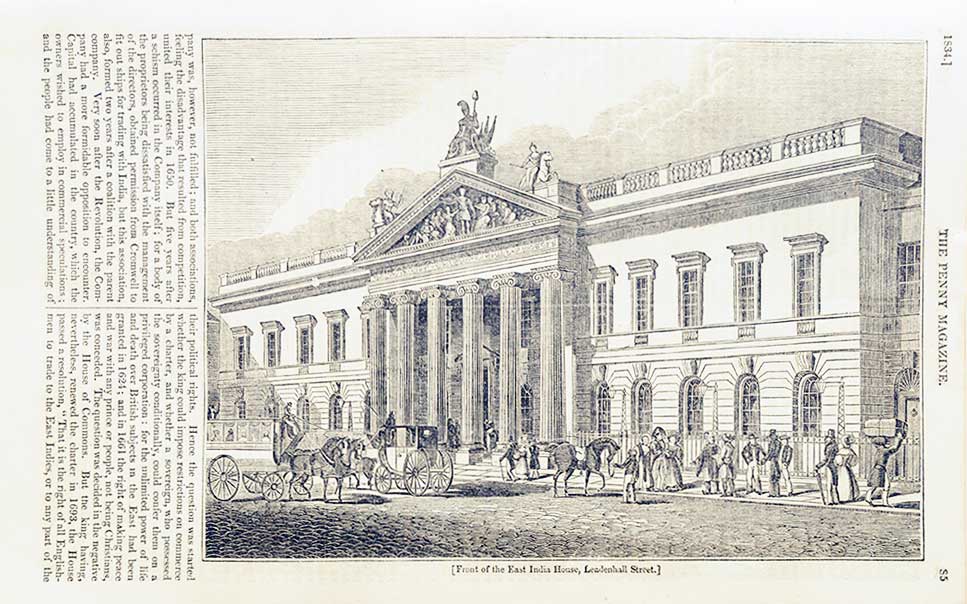
The Yamuna River flows gracefully through the foreground, emphasizing the strategic location that helped the city flourish for centuries. This historic engraving captures Delhi at a time when the scars of the 1857 Indian Rebellion were still fresh, shortly after the British Crown assumed direct rule from the East India Company.
Delhi is often described as a city built upon the remains of successive capitals, each representing a different era of Indian history. Before Shahjahanabad, the region witnessed the rise of Lal Kot, Siri, Tughlaqabad, Jahanpanah, Firozabad (Firoz Shah Kotla), and Purana Qila, making Shahjahanabad the last of the celebrated medieval cities of Delhi.
The engraving also preserves a landscape that would soon undergo another dramatic transformation. Just over fifty years later, construction of New Delhi began in 1911 on Raisina Hill, creating the grand imperial capital designed by the British. As a result, this rare 1860 print offers a fascinating visual bridge between the fading Mughal capital and the birth of modern India’s capital city. Click image to enlarge.
Did you know – the city was enclosed by walls over 6 metres (20 feet) high and was entered through 14 grand gates, including the famous Lahori Gate, Ajmeri Gate, and Kashmiri Gate.