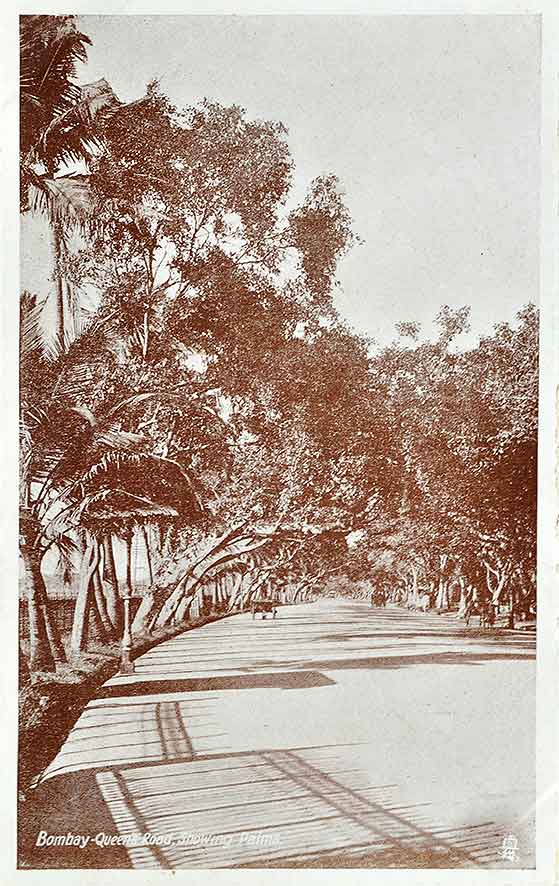
Queens Road, Bombay, Before Marine Drive, 2 Postcards 1900
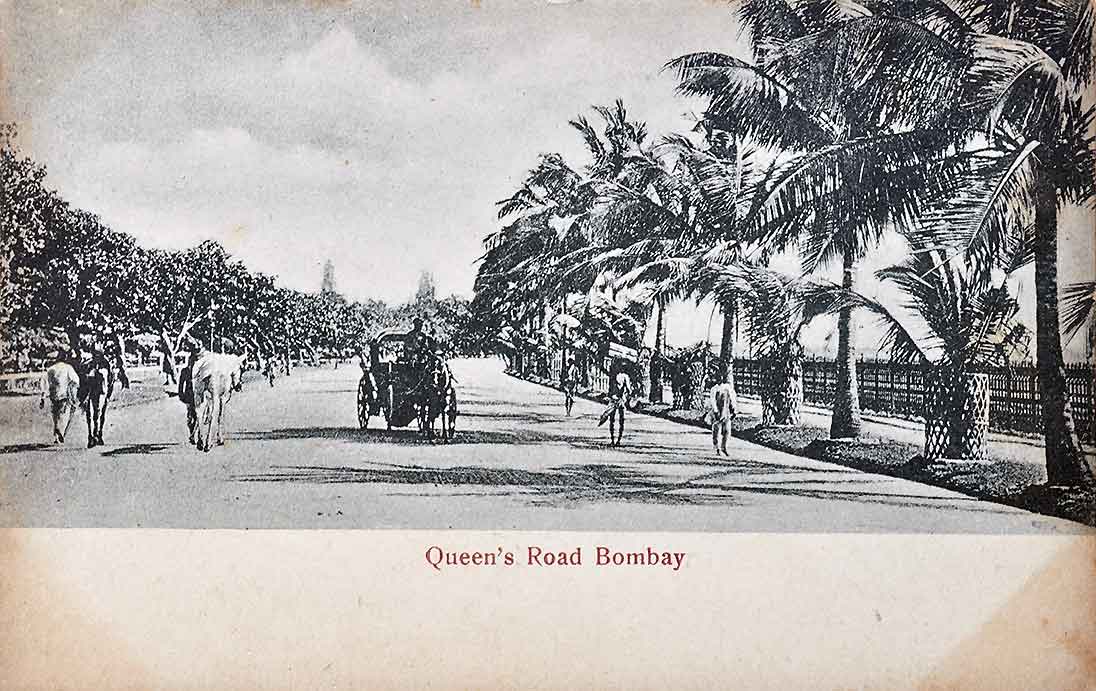
Two rare postcards from circa 1900 capture the charm of Queen’s Road in colonial Bombay (Mumbai). Once regarded as one of the most prominent thoroughfares of the city during the late 19th century. Known for its scenic location along the Back Bay, Queen’s Road served as a picturesque seaside promenade where residents and visitors enjoyed leisurely walks, carriage rides, and sweeping views of the Arabian Sea.
During the British era, Queen’s Road ran along the curve of Back Bay, beginning near Churchgate Station and extending northwards towards what is now the Girgaon (formerly Girgaum) area. It formed an important urban spine of the city, connecting key commercial and residential districts while offering an open, breezy escape from the dense inner quarters of Bombay.
The road’s prominence, however, began to decline in the early 20th century. With the ambitious Back Bay Reclamation project of the 1920s, a new and more iconic boulevard, the Marine Drive, came up further west. This modern, sweeping roadway soon became Bombay’s most iconic seafront, overshadowing Queen’s Road and reducing it to a secondary, parallel route.
In post-independence India, Queen’s Road was renamed Maharshi Karve Road in honor of Dr. Dhondo Keshav Karve. A pioneering social reformer who dedicated his life to women’s education and welfare, particularly advocating for widow remarriage and female empowerment.
Today, Maharshi Karve Road bears little resemblance to its colonial past. Once a tranquil promenade, it has evolved into a bustling commercial stretch lined with sari shops, textile stores, and local businesses, reflecting the dynamic and ever-changing character of Mumbai.
Also see Cars at Queens Road.
Did you know – that the Port Trust owns, in all, some 1800 acres or more of land, about one-eighth of the whole island of Bombay, nearly all of its land reclaimed from the sea by the British.