19th-Century European Women in Watercolour and Pencil by Major A. C. Hutchinson
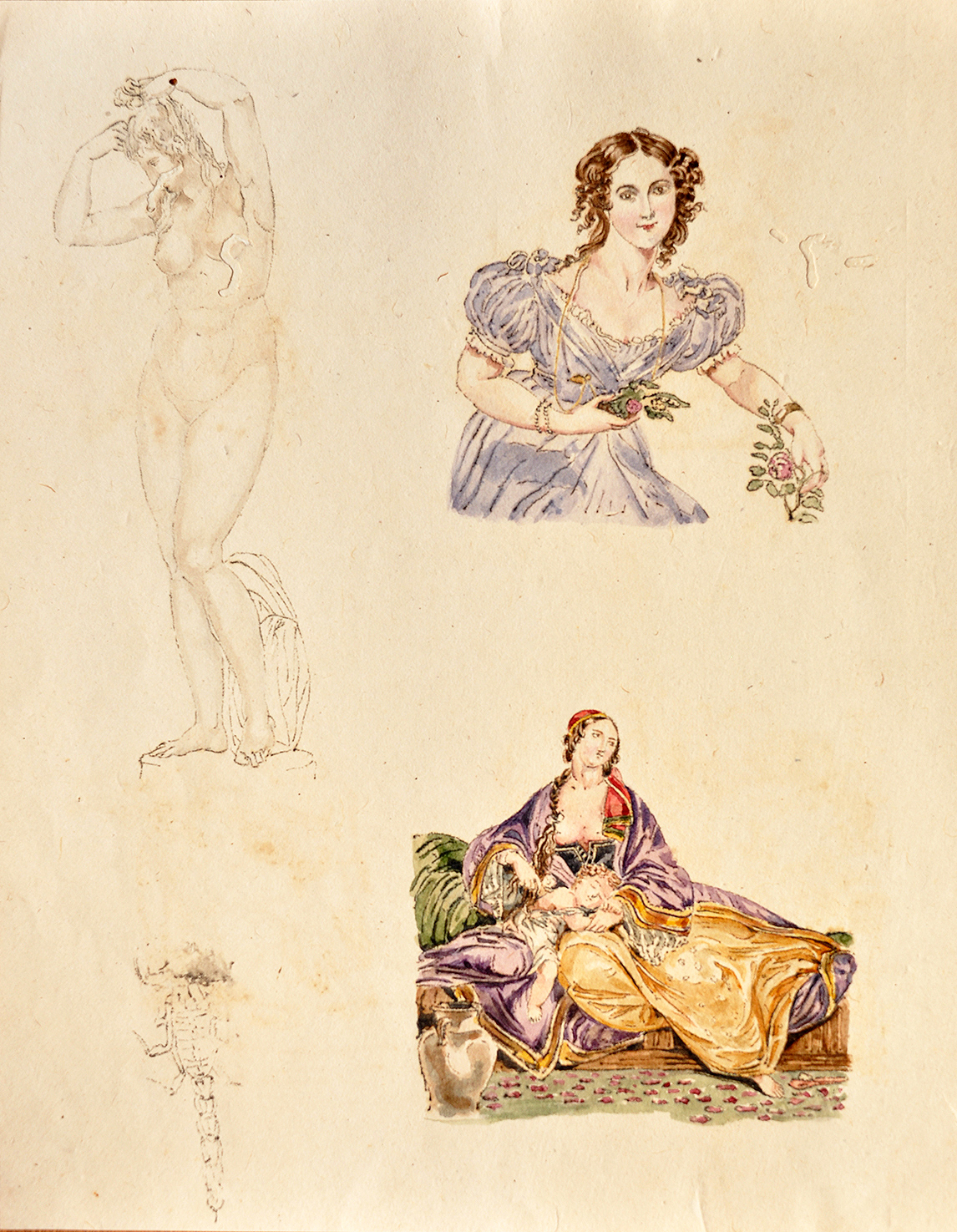
A 19th-century watercolour painting of European women by Major A C Hutchinson of the Bengal Artillery. Although unsigned, the watercolour exhibits a style that is perhaps consistent with works attributed to a Major A. C. Hutchinson. Biographical details concerning Hutchinson remain scarce. He is believed to have served with the Bengal Artillery of the East India Company during the 1830s.
Sketching and watercolour painting were popular accomplishments among officers stationed across India, who frequently recorded scenes, people, and studies from their travels and daily life. Featuring delicately rendered female figures executed in pencil and watercolour, the work reflects the Victorian fascination with classical subjects, portrait studies, and refined draftsmanship.
During the era of British India, painting served as both a creative outlet and a means of recording experiences in a distant land. Long before photography became commonplace, British officers, civil servants, and their families often maintained sketchbooks filled with landscapes, architectural views, portraits, and figure studies. These artworks combined European artistic traditions with observations gathered during life in the subcontinent. The artistic culture that flourished among British residents in India during the 19th century.
This 19th-century 10 x 8 inch watercolour painting shows two elegantly dressed European ladies, a pencil sketch of a nude, and a scorpion. Because of its over 180 years age, the painting has developed some wormholes.
Did you know – before photography became commonplace, British officers in India often documented their surroundings through sketches and watercolours. A simple sketchbook could serve as a travel diary, personal album, and artistic portfolio all at once—preserving moments that might otherwise have been lost to history.