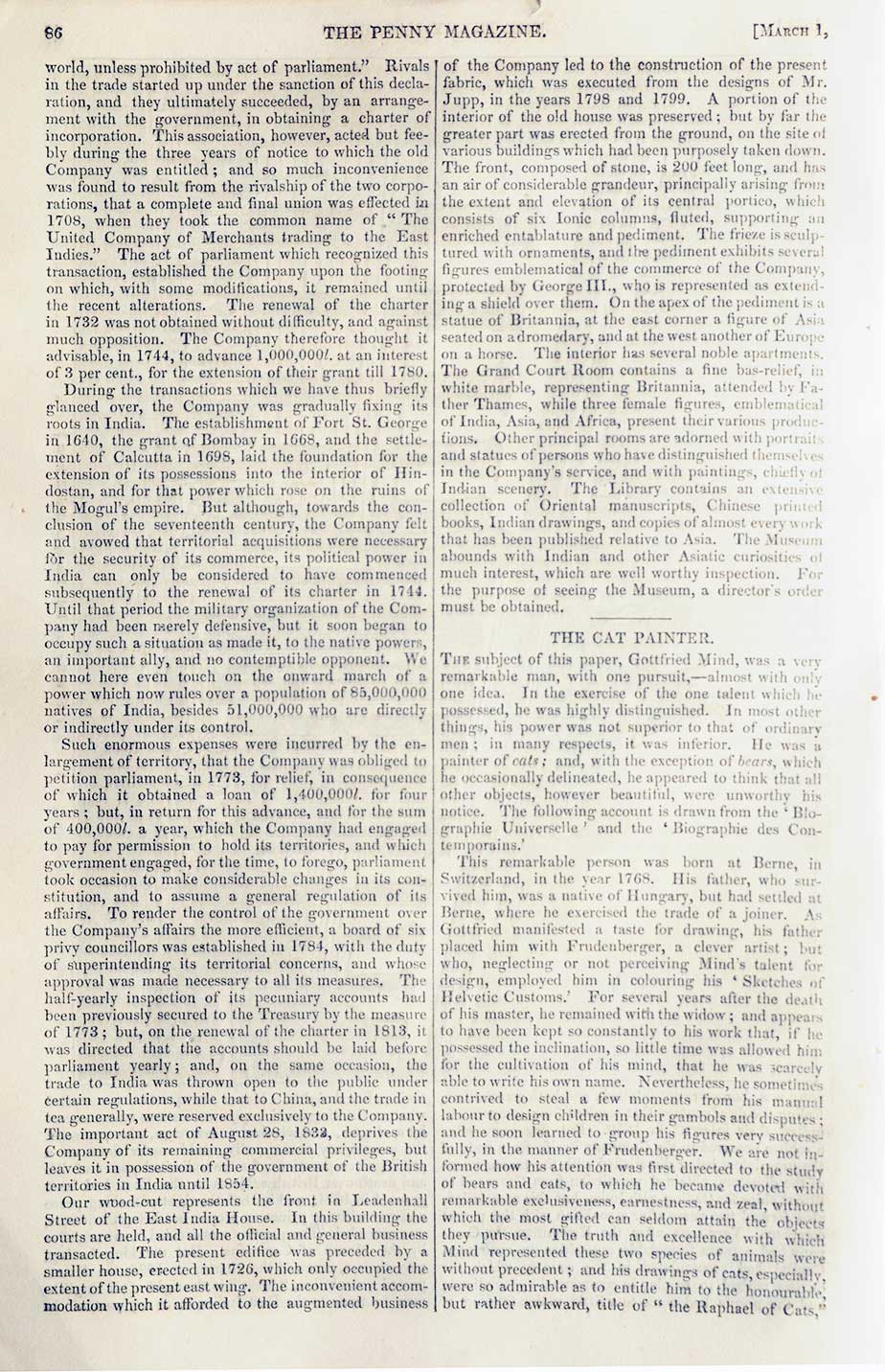
History Of British East India Company In India, 1834 Penny Magazine
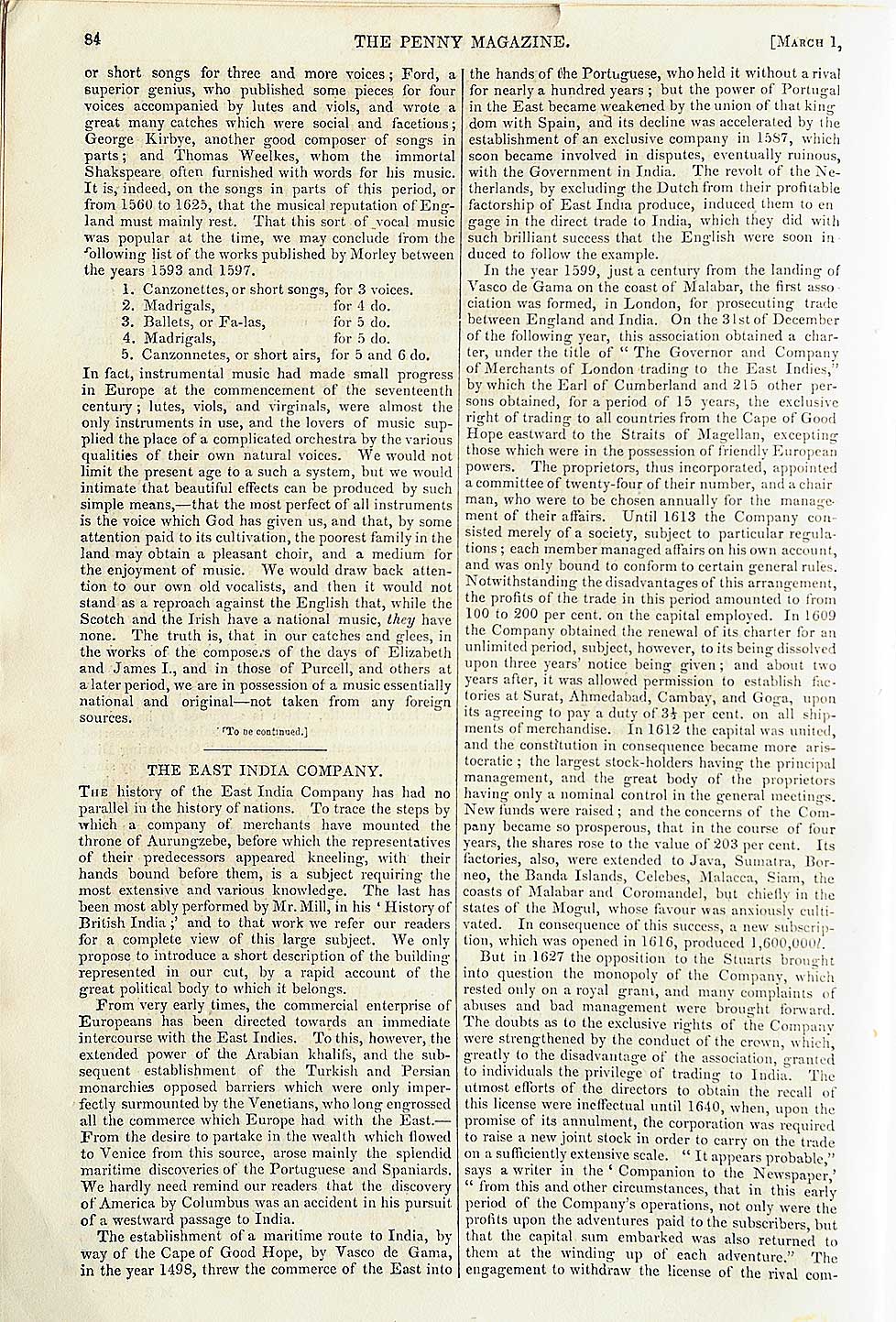
A four-page feature in the March 1, 1834 issue of The Penny Magazine offers a fascinating account of the British East India Company and its transformation from a trading enterprise into a major political power in India. The article traces the Company’s origins to the late 16th century, describing how English merchants organised themselves in London in 1599 to pursue direct trade with India.
After the Portuguese established their dominance over the sea route to India following Vasco da Gama’s arrival on the Malabar Coast in 1498, and amid growing Dutch competition, the English gradually sought their own commercial footholds. The Company’s first important settlement in India was at Surat, on the Gujarat coast, where English merchants established a factory in the early 17th century. From this western Indian trading centre, the Company’s network expanded to other parts of the subcontinent.
The Penny Magazine highlights the later establishment of Fort St George at Madras in 1640, the acquisition of Bombay in 1668, and the settlement of Calcutta in 1698, developments that helped transform the Company from a commercial organisation into an increasingly powerful territorial power.
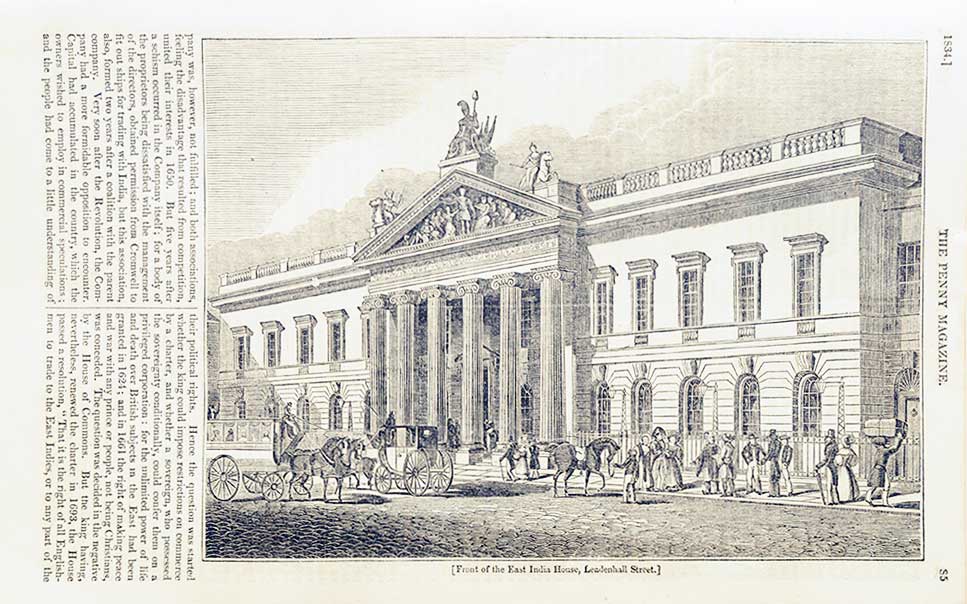
Equally fascinating is the weekly’s account of East India House in London, the Company’s imposing headquarters and the centre from which it directed its Indian affairs and overseas commerce. The accompanying wood engraving shows the grand building with its Ionic columns and sculptures. The article describes the Company’s growing role in governing India, increasing government control and the gradual decline of its commercial privileges. By the time this issue appeared in 1834, the Charter Act of 1833 had effectively ended the Company’s remaining commercial role, leaving it primarily as an administrative organization for governing British territories in India.
Did you know- the Company’s political power finally ended after the Indian Rebellion of 1857, when the Government of India Act 1858 transferred the administration of British India from the East India Company to the British Crown. The Company itself survived as a corporation until 1874, when it was formally dissolved.