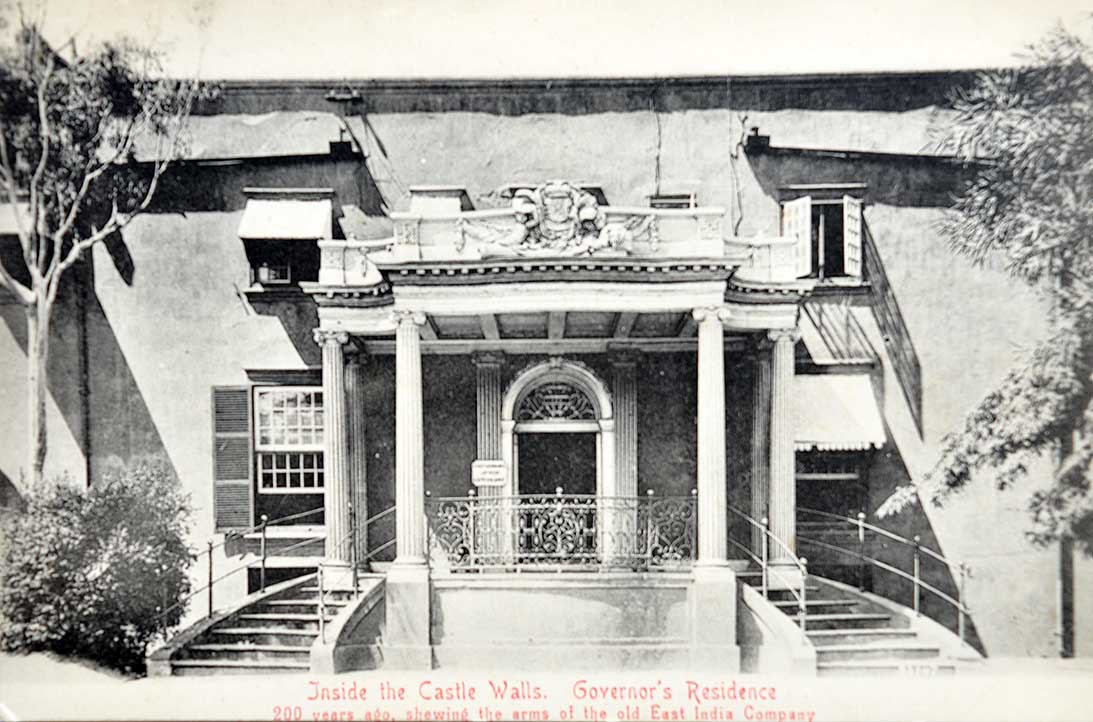
The Dutch East India Company Residence In Cape Town, 1900 Postcard
Vintage postcard dating to 1900 depicts the former residence of a Dutch East India Company (VOC) governor in Cape Town, South Africa. While the image itself has no direct Indian provenance, Cape Town occupied a crucial position in the wider history of India and Southeast Asia-bound maritime trade. For centuries, it functioned as a strategic stopover for European ships sailing to India and Southeast Asia along the spice route.
Situated near the southern tip of Africa, Cape Town became indispensable for long-distance voyages to the east. Ships sailing from Europe relied on the Cape for fresh water, provisions, and essential repairs.
The strategic value of the Cape made it a coveted asset among European powers seeking control over the Indian Ocean trade. The settlement at Cape Town was established by the Dutch in 1652, approximately 64 kilometres north of the Cape of Good Hope.
It was the Portuguese who first discovered the spice route when Vasco Da Gama’s flotilla landed at Calicut (Kozhikode) in 1498. In the centuries that followed, other European powers raced to exploit this route—most notably the Dutch in the early 17th century, followed by the English and French—each seeking dominance over the spice trade.
The rounding of the Cape of Good Hope revolutionised global commerce by eliminating unreliable overland routes and enabling faster, large-scale maritime exchange. However, the Cape Route gradually lost its strategic importance after the opening of the Suez Canal in 1869, which offered a shorter and more direct passage between Europe and Asia. Click image to enlarge.
Did you know – while Columbus looked for India by sailing West (and found America), Vasco da Gama successfully navigated around Africa, reaching Calicut in 1498, changing global trade forever.