Rare 1914 Newspaper Shows Bombay Port’s Expansion

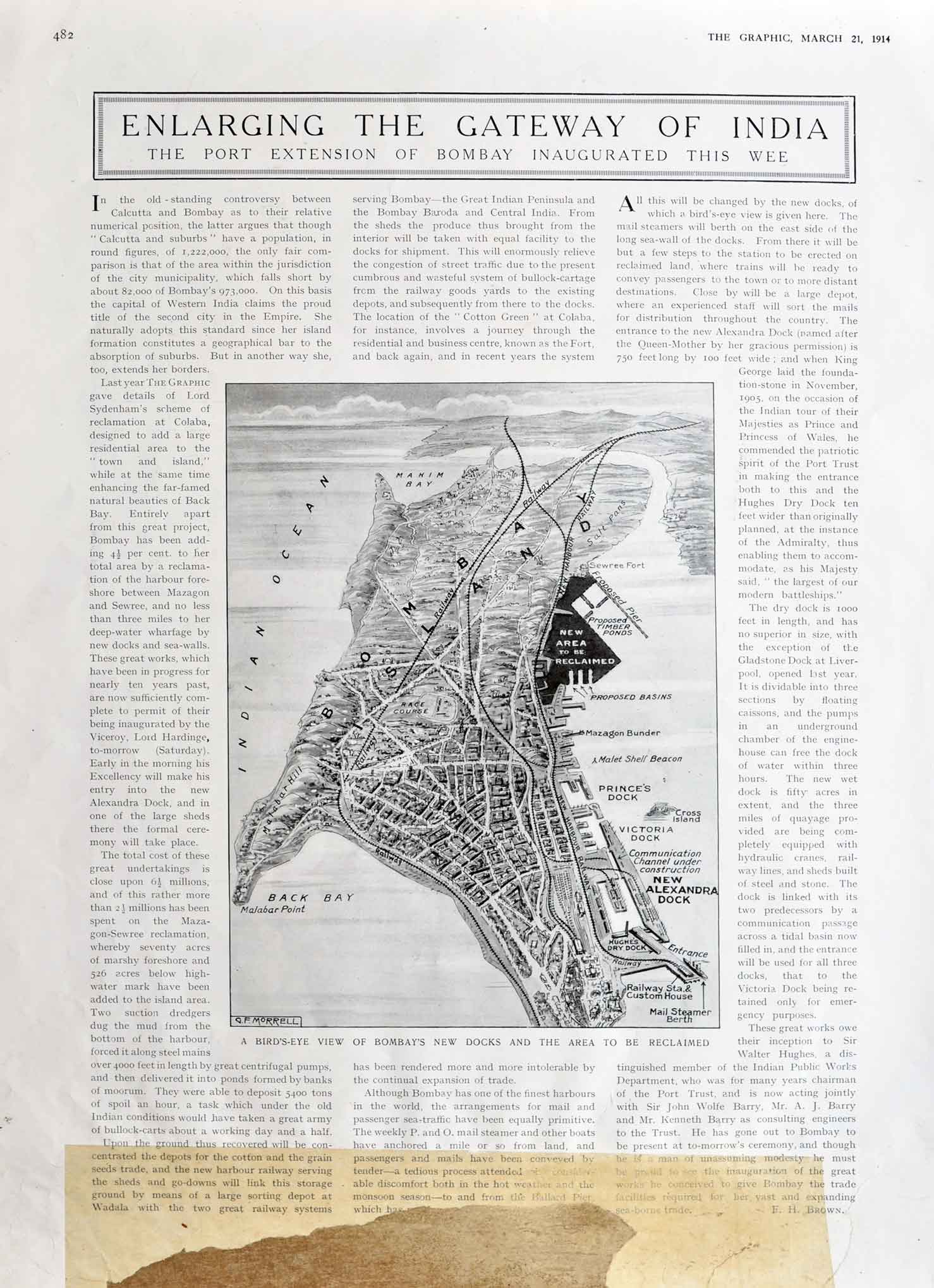
A fascinating page from the Graphic newspaper dated March 21, 1914, captures a transformative moment in Bombay’s port history. By the early 20th century, Bombay (now Mumbai) had overtaken Calcutta (now Kolkata) in strategic importance, earning recognition as the “second city” of the British Empire after London. Its unrivalled position as both a major seaport and railway hub made it the commercial heart of western India.
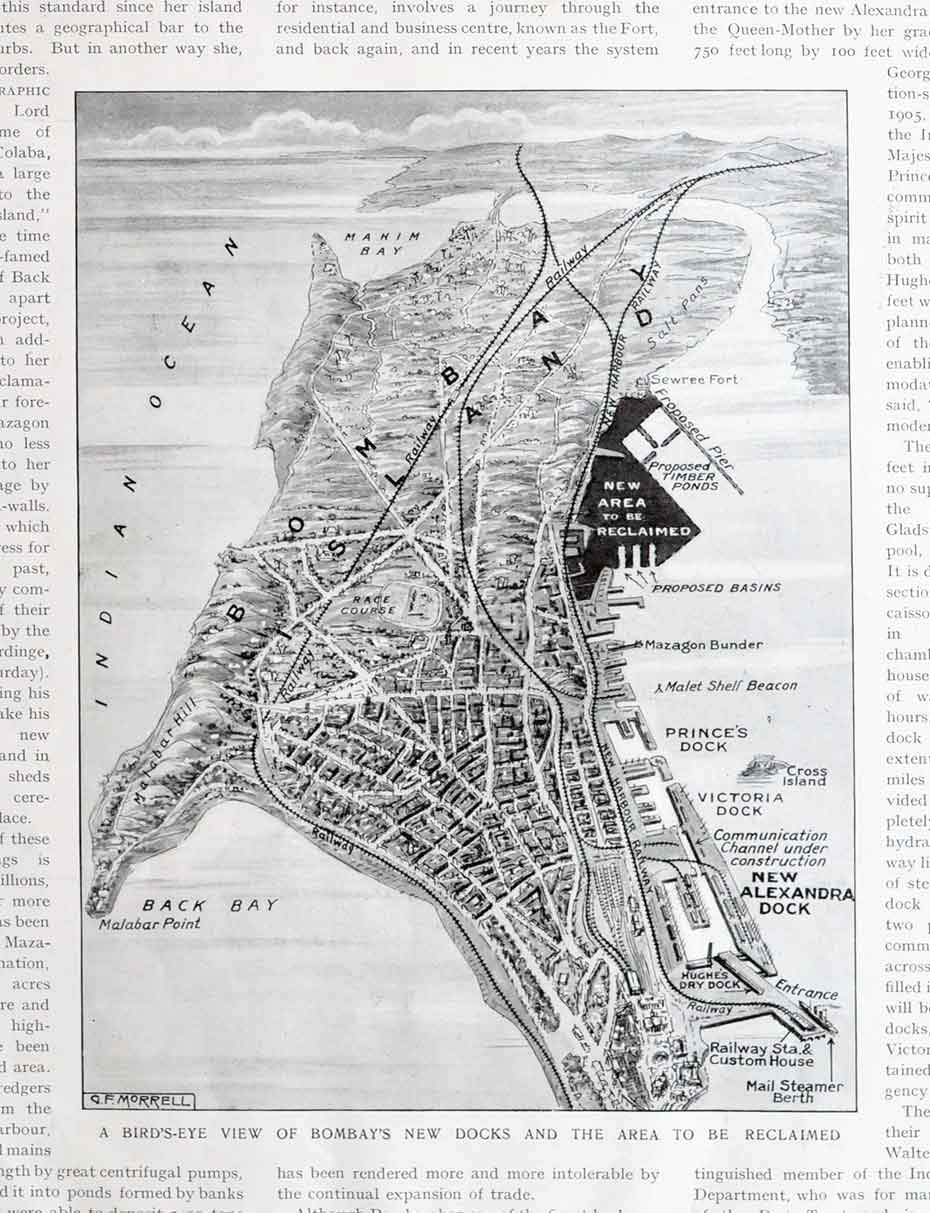
This remarkable newspaper print highlights the ambitious enlargement of Bombay Port, particularly along the eastern waterfront between Mazgaon and Sewri, where extensive land reclamation reshaped the harbour’s edge. Around 600 acres were recovered from the sea, creating valuable new land for the city’s booming cotton and grain trade. These newly reclaimed grounds were planned as vast storage depots, reinforcing Bombay’s role as the export hub of colonial India. The accompanying map in the newspaper offers a rare glimpse into how engineers and planners envisioned the city’s maritime future.
A major milestone in this expansion came with the opening of the Alexandra Dock on March 21, 1914, inaugurated by Lord Hardinge, the then Viceroy of India. The dock represented a major leap in Bombay’s shipping capacity, allowing the port to handle increasing volumes of international trade more efficiently. Equally significant was the development of a new harbour railway connection, designed to link the docklands and storage depots with Bombay’s two great railway systems, the Great Indian Peninsula Railway (GIPR) and the Bombay, Baroda & Central India Railway (BB&CI). This seamless integration of sea and rail transport helped transform Bombay into one of the most powerful trading gateways in Asia.
Did you know – Alexandra Dock’s foundation stone was laid by, George, Prince of Wales in 1905.