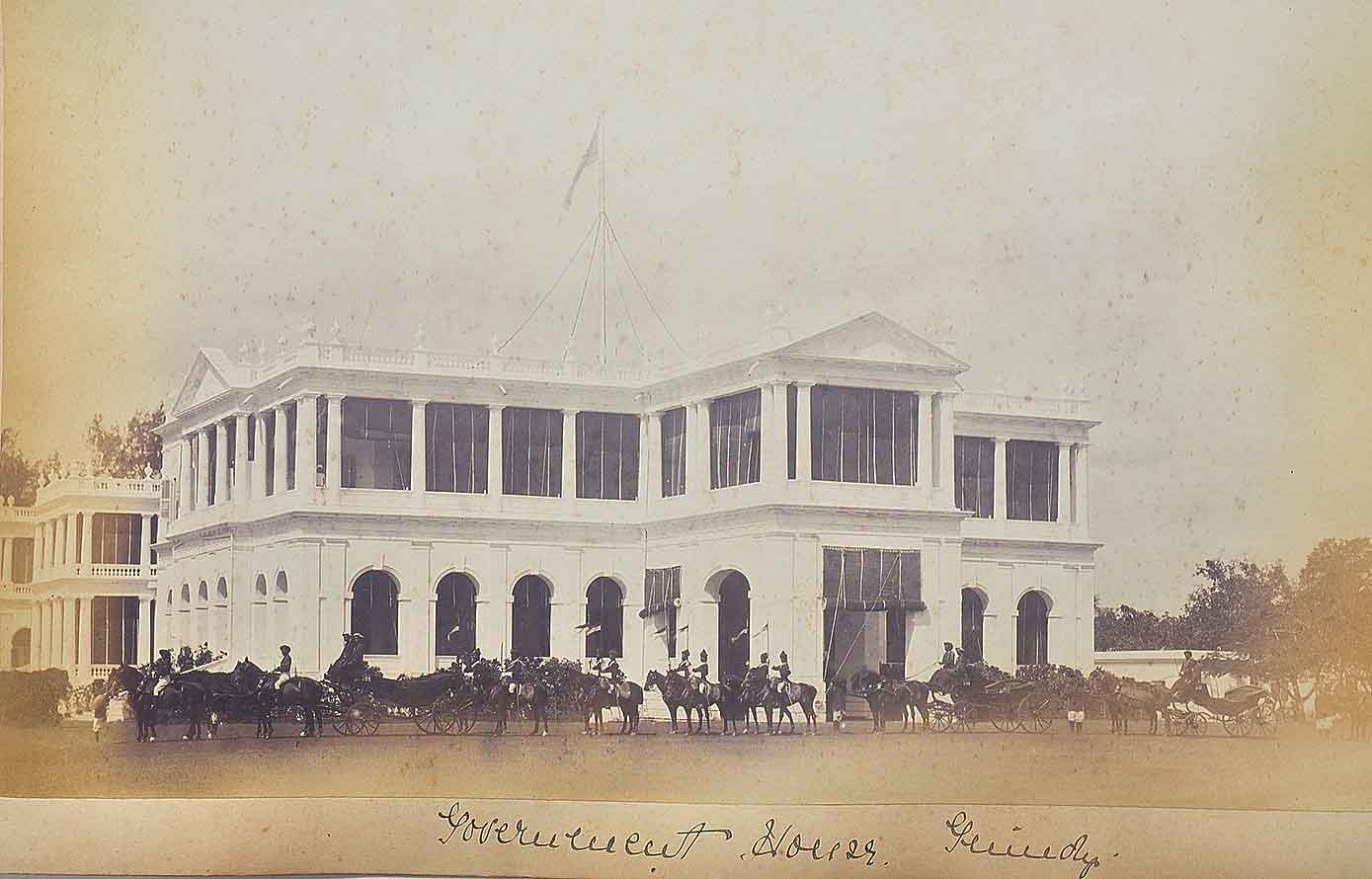
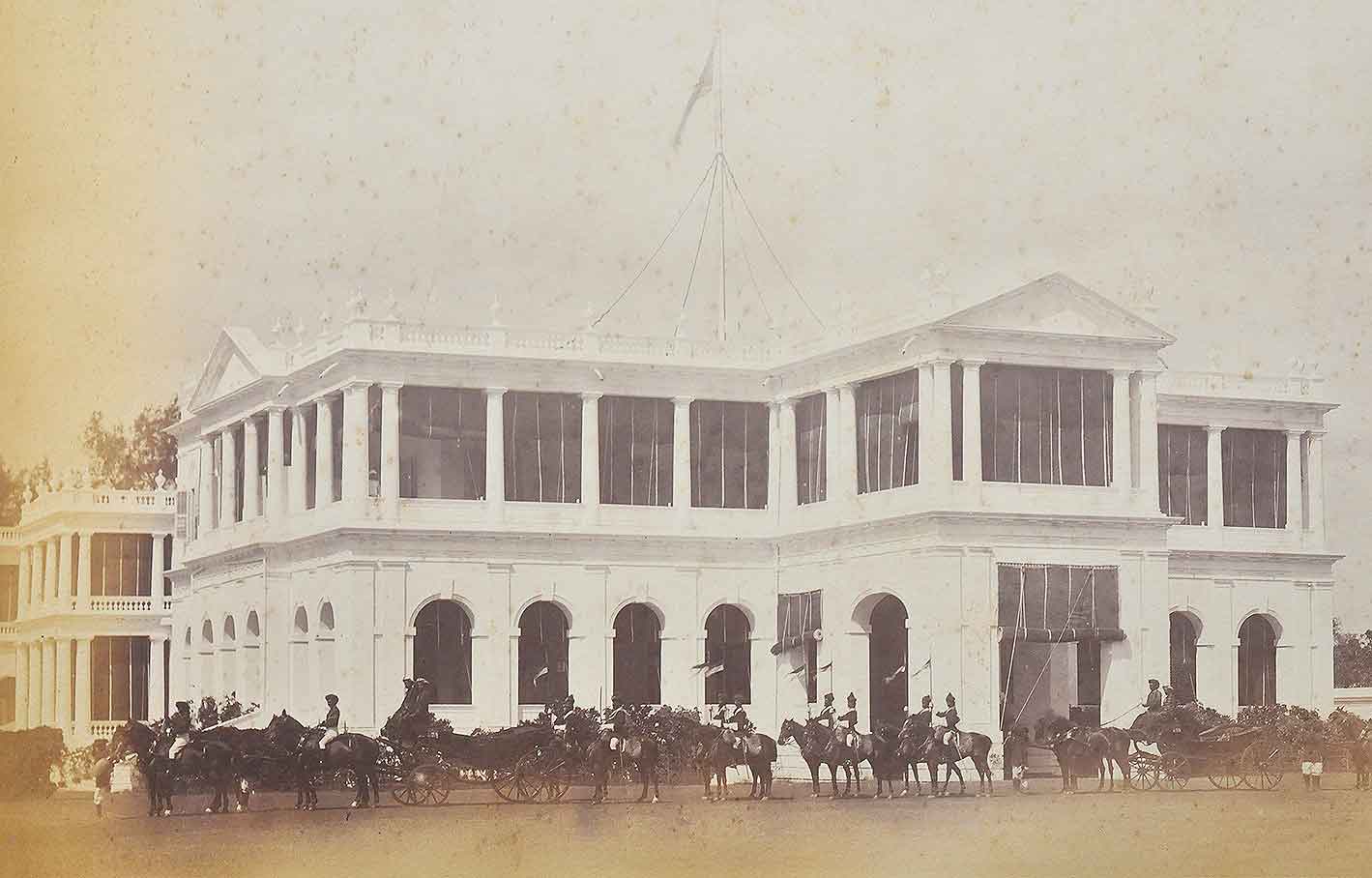
Government House British Era Madras, Old Photo 1888
This is an old 1880 photograph of the British India-era Government House in Madras, now Chennai. Now known as Raj Bhavan. Fort St George in Madras was Britain’s first fortification in India. It was established by the East India Company in 1640. The Fort had a stately residence for the British Governors of Madras. But as the Fort got more crowded, a need for a second retreat was much felt by one of the Governors. A more spacious mansion with vast verdant surroundings was desired.
Thus an appropriate place with a bungalow was located in Guindy on the outskirts of the city at that time. Owned by Luis De Madeiros a Portuguese merchant. By 1753 a deal was struck and the place was bought by the East India Company from him. By and by more land was added to the estate including a property taken over from the Nawab of Carnatic in 1855.
Which grew into a sizeable green estate of around 200-400 acres. Likewise, the original bungalow was rebuilt into a larger mansion and was called Government House as shown in this 1880 photo. However, in later years greater portions to the building would be added. So much so that the ‘House’ grew into a sprawling mansion. After India’s independence, it became the Raj Bhavan, the residence of the Tamil Nadu Governor. An impressive lineup of British Indian Guards on horseback is visible. Grandly awaiting to take the colonial masters to their destination. Click on the photo for better view.
See older post Government House In Madras – Old Photogravure 1895.
Did you know- that Guindy was once a heavily forested area.
From the collection- Raja Ravi Varma’s “Birth of Shakuntala” Oleograph 1894., Native Chiefs At Delhi Durbar – Old Postcard 1911., The Dutch Capture of Cochin – Antique Plan 1702
The images are of the actual items from my collection. And Not a photocopy, pirated, reproduced, stock photos, or taken from other sources.