
First International Flight to India Arrives at Calcutta

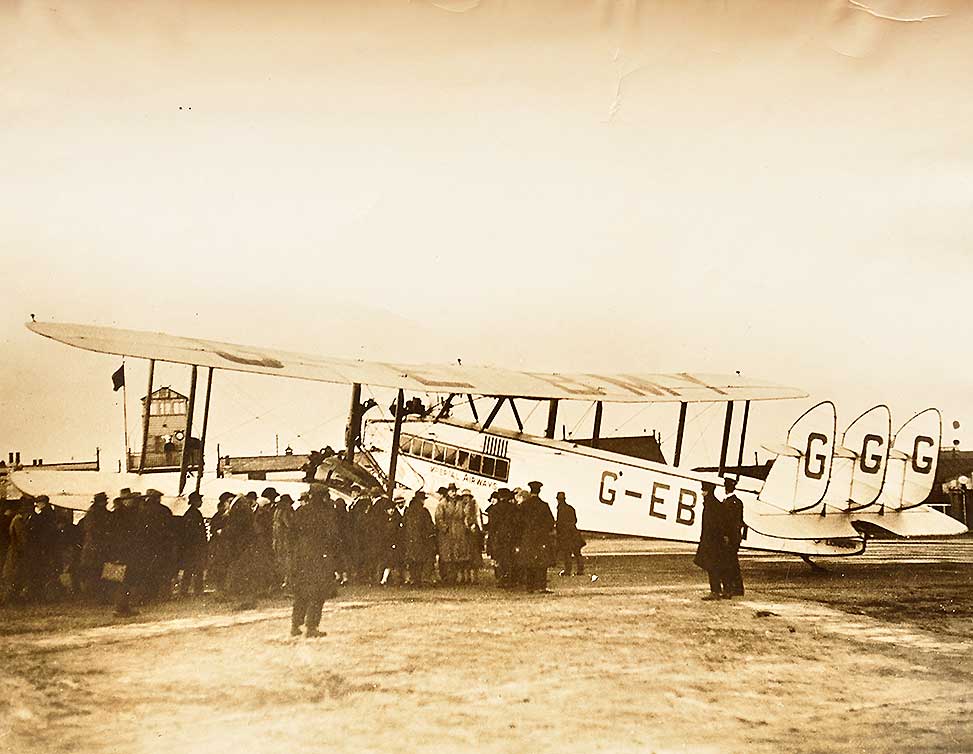
Two rare 1919 photographs capture a Handley Page aircraft near the Calcutta Race Course, offering a fascinating window into the dawn of aviation in India. This was the first international flight to India from England. The plane is shown parked at the racecourse grounds in Calcutta. The images preserve a remarkable chapter in the history of early aviation.
To see more of this historic flight in a 1919 newspaper, go to First Long Distance Flight Europe To India, 2 Newspapers 1919.
The story of aviation had begun only sixteen years earlier in 1903. The Wright brothers achieved the world’s first successful powered flight in the United States. Their fragile biplane revolutionised air transport and inspired rapid experimentation across Europe. Within a decade, aircraft technology advanced at an extraordinary speed. As engineers and manufacturers competed to build larger, more reliable aeroplanes. Capable of carrying passengers, cargo, mail, and military equipment over long distances.
Among the pioneering aviation companies of the period was Handley Page Limited, established in England in 1909 by Frederick Handley Page. The company soon became internationally known for its massive biplanes, many of which were designed for long-range operations. During and after the First World War. Handley Page aircraft represented some of the most advanced aviation engineering of their time and played a significant role in shaping early long-distance air travel.
India quickly emerged as one of the most important destinations in the expanding world of aviation. Air routes linking England and India were viewed as both technological achievements and symbols of imperial connectivity. At a time when sea voyages could take weeks, the prospect of travelling by air to India captured global imagination.
One of the photographs shows the Handley Page aircraft preparing for take-off from an open field beside the Calcutta Race Course. Highlighting how early aviators often relied on improvised landing grounds before dedicated airports existed in India or the world. A handwritten note on the reverse side of the image reads:
“Just about to take off on a stretch of ground next to the Calcutta race course. The chap pointing is one of our native police, I am standing just behind him, in shorts.”
The candid inscription vividly reflects the atmosphere surrounding early aviation in colonial India. Aircraft operations were informal by modern standards, and flights frequently attracted crowds of curious spectators eager to witness the marvel of powered flight.
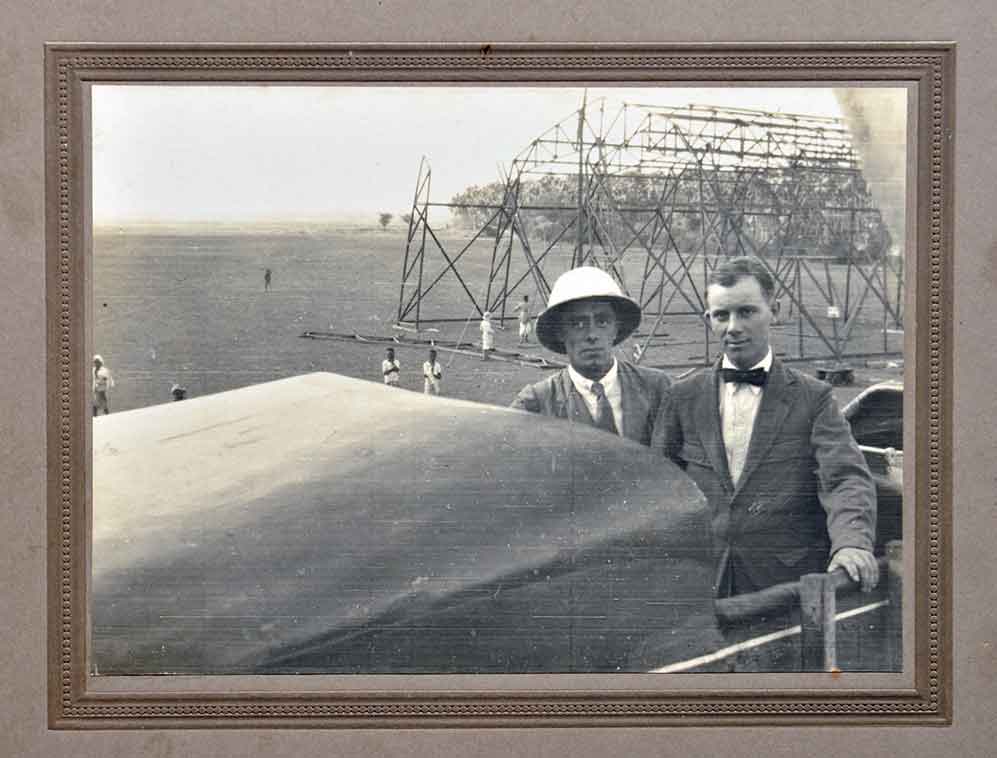
The second photograph appears to offer a closer look at the aircraft’s pilots or crew members. Providing another rare glimpse into the people behind these pioneering journeys. Such images remain valuable visual records of the adventurous spirit and experimental nature of aviation during the early twentieth century.
In the years that followed, flying boats became popular on the England-to-India route because they could land on rivers, lakes, and coastal waters where proper runways had not yet been constructed. One of the most notable milestones of this era was the arrival of the first Viceroy to reach India by air, who travelled aboard a flying boat. Click first photo to enlarge.
Read more This Day In Aviation.
Did you know – in 1924, Handley Page Transport merged to form Imperial Airways, as the UK’s national airline service.