Elephanta Caves Got Its Name From This Stone Statue, 1926 Photo
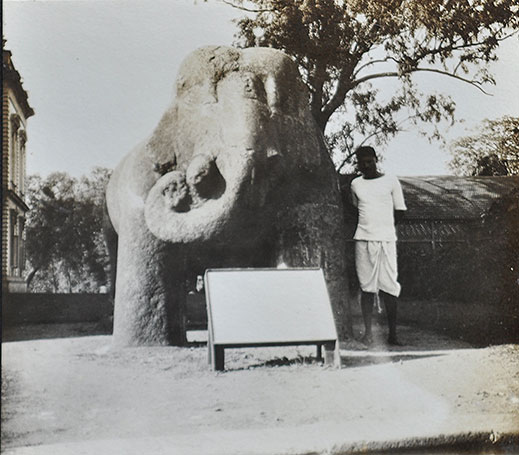
An old photo of the Elephant Statue that gave the name to the Elephanta Caves in Bombay (Mumbai). The photo was taken from the Victoria and Albert Museum in Bombay in 1926. Long before “Elephanta Caves” appeared on any tourist map, the island in Bombay Harbour was known locally as Gharapuri, the “city of caves.” That changed after 1534, when the Portuguese seized the island from the Gujarat Sultanate. They found a colossal, life-size stone elephant standing near the old landing place.
The sculpture, carved from solid granite rock, served as a striking landmark for sailors navigating the harbour’s cluster of small islands. The Portuguese began calling the place “Ilha do Elefante” — the Island of the Elephant. The Portuguese era was not kind to the site; soldiers reportedly used many of the cave temple’s carved panels for target practice. Defacing figures and damaging reliefs. The elephant statue itself did not escape this rough treatment. Despite the destruction inflicted, the elephant’s name stuck, and it eventually replaced Gharapuri in common usage. This gave the UNESCO World Heritage Site the identity it carries to this day.
The elephant statue’s story took another dramatic turn under British rule. In 1864, British officials attempted to relocate the massive stone elephant from the island to England. An ambitious engineering feat involving cranes and heavy machinery. The lifting equipment failed during the attempt, and the statue crashed to the ground and broke into several pieces. Rather than abandon the artifact, the fragments were later recovered, painstakingly reassembled, and put on public display in Bombay. Today, the restored elephant stands in the Dr. Bhau Daji Lad Museum (formerly the Victoria and Albert Museum) at the Jijamata Udyan gardens in Byculla, Mumbai. Click image to enlarge.
Did you know – after the crane broke and the statue shattered, the pieces sat around for decades before being fully reassembled — some accounts put the final restoration as late as 1914, roughly 50 years after the accident.