First Airliner To Reach India Landmark In Early Indian Aviation, 1926 Photo

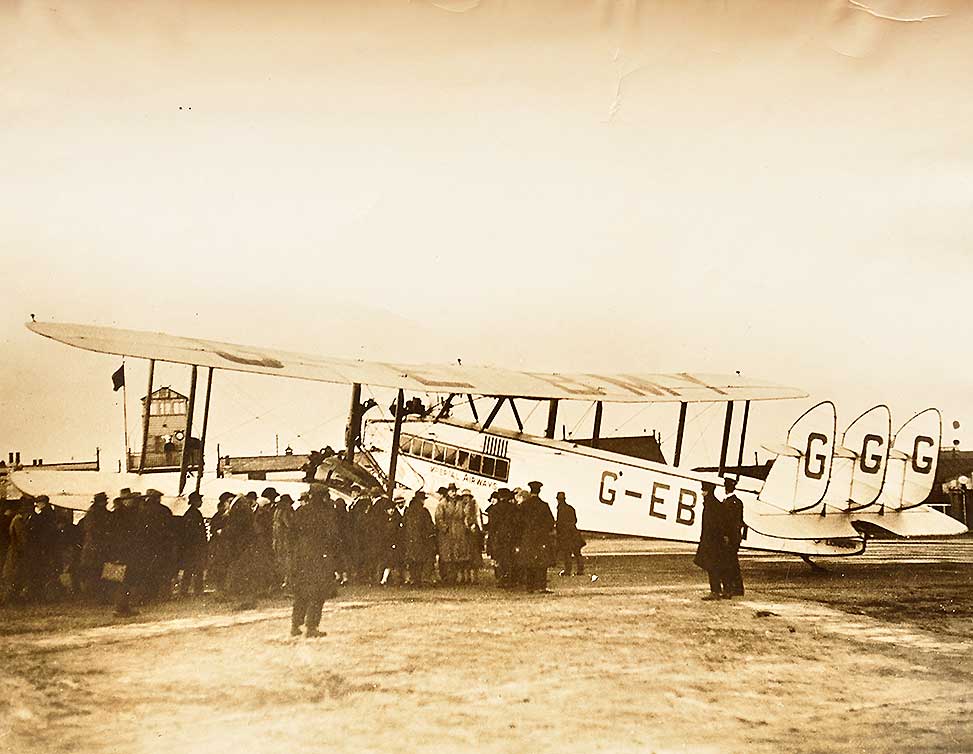
This rare 1926 news photo shows the first airliner to reach India, marking a landmark in early Indian aviation. It was an Imperial Airways flight from England to India. With a seating capacity of fourteen passengers, including a woman. In December 1926, aviation entered a transformative era when one of the earliest commercial airliners departed from Croydon, England, bound for India. Marking a pioneering moment in long-distance commercial air travel. The aircraft, identified as a De Havilland DH.66 Bristol Jupiter-Empire Hercules aeroplane. It represented cutting-edge engineering of its time. With a modest seating capacity of just fourteen passengers, this tri-engine biplane was among the first to make sustained international passenger routes viable.
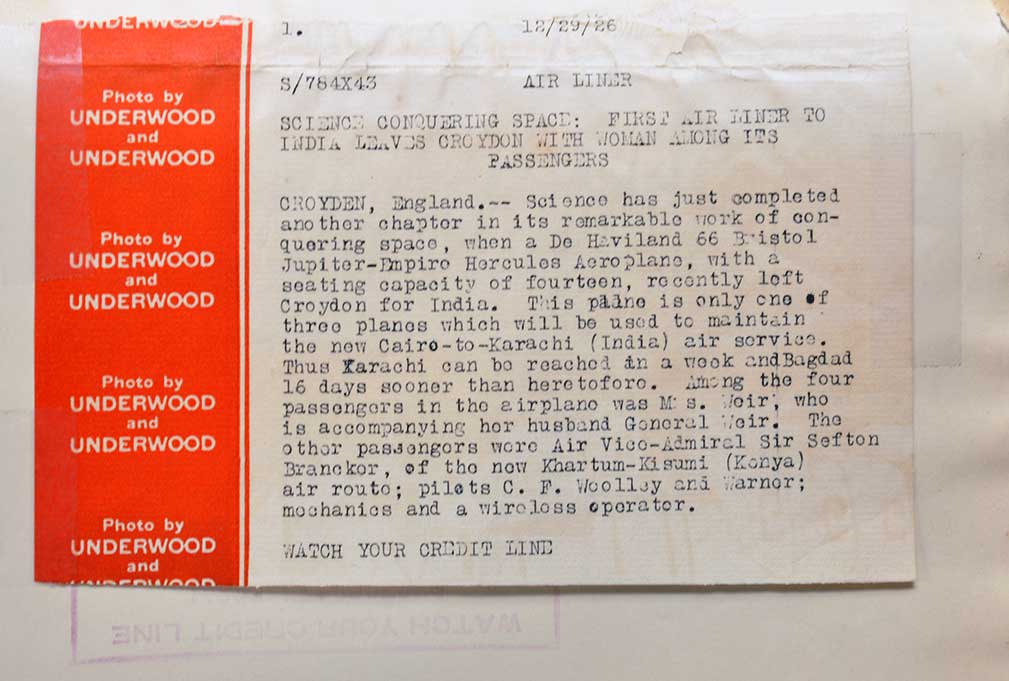
The historic flight was part of the newly established Cairo-to-Karachi (undivided India) air service, a critical segment in connecting Britain to India by air. According to the original archival note on the reverse of the photograph, the journey dramatically reduced travel time—Karachi could now be reached in about a week, and Baghdad nearly 16 days sooner than traditional routes. This advancement not only revolutionized travel but also strengthened administrative and commercial links within the British Empire.
The aircraft featured in the image is described as a De Havilland 66 “Hercules,” a tri-motor biplane designed for reliability over long distances at the time. On board were fourteen passengers, including Mrs. Weir, who traveled alongside her husband, General Weir. The flight crew consisted of pilots C. F. Woolley and Warner, along with mechanics and a wireless operator. Highlighting the complexity and risk of early aviation. Unlike modern flights, these journeys required constant technical supervision and communication handling mid-air. This 1926 flight was more than just a technological achievement; it symbolized the shrinking of the world. For the first time, regular air routes began replacing lengthy sea voyages between Europe and India. Click first image to enlarge.
Did you know – early airliners like this one flew at low altitudes, often navigating visually. Unlike the airlines of today that use very advanced instruments. Flights at that time weren’t continuous, passengers often stopped at multiple cities for refueling and rest.