The Plan of Crawford Market’s Fountain in Bombay, 1874 Newspaper Page
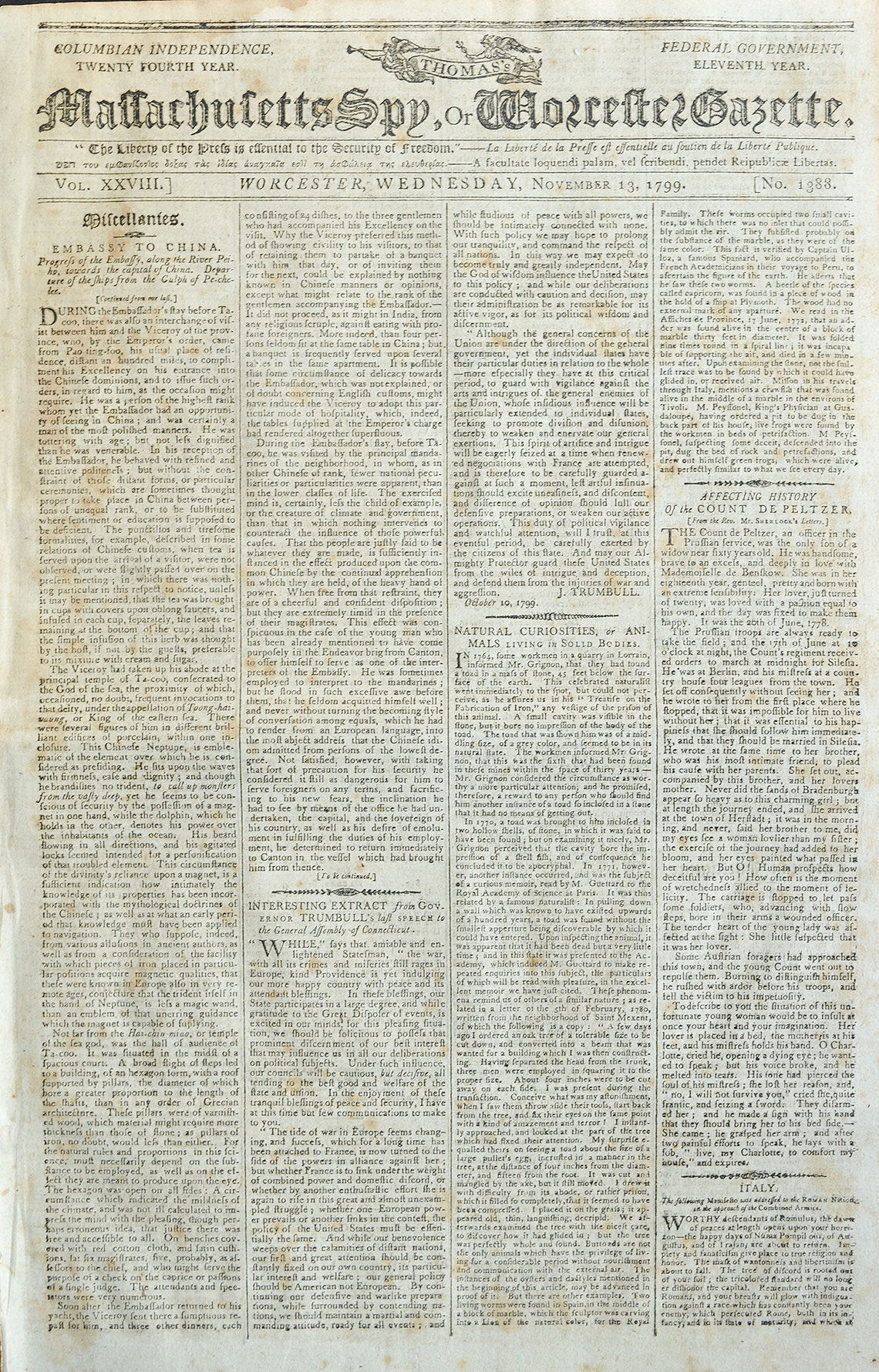
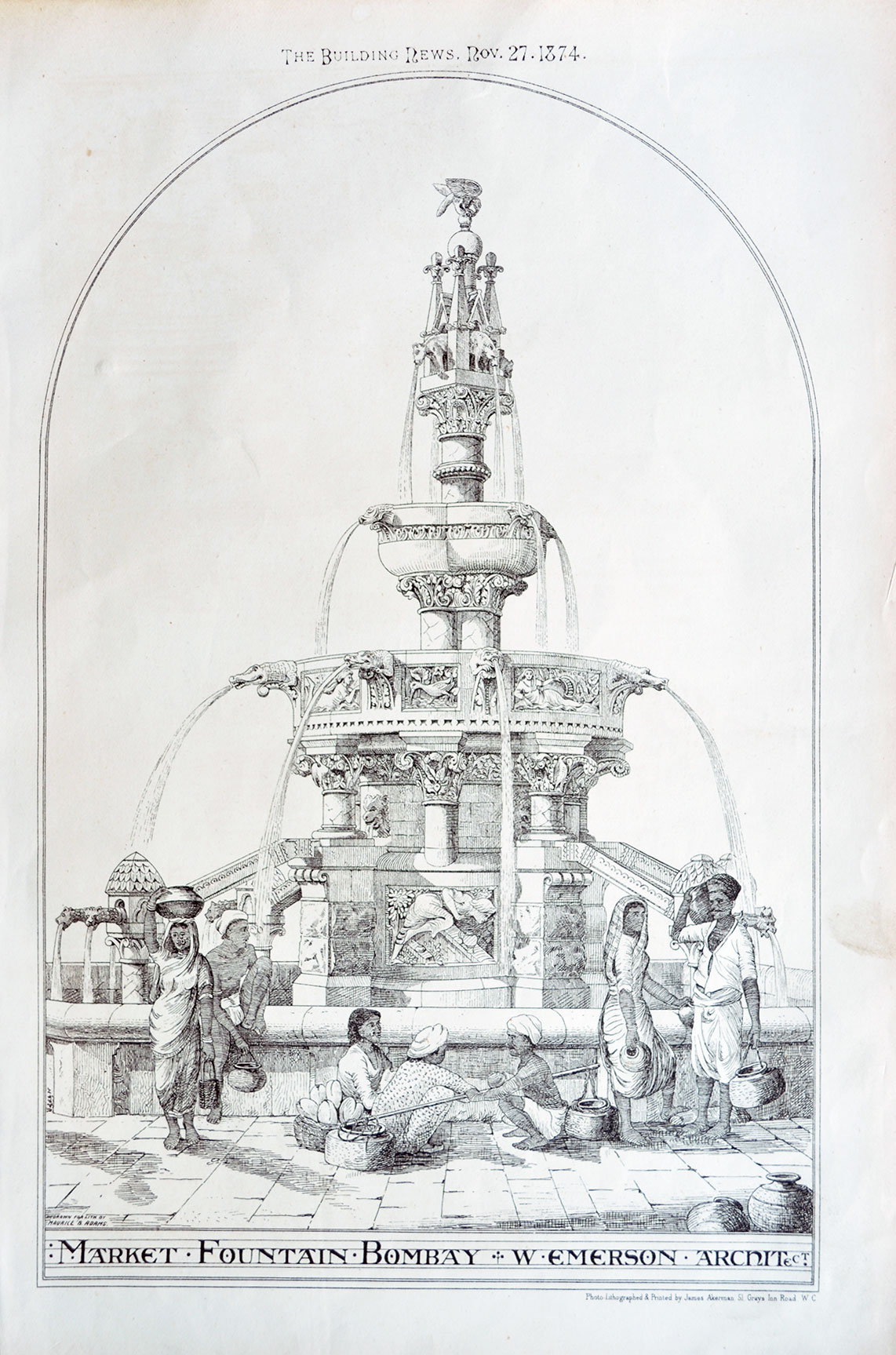
A page from the London-based The Building News of 1874 features the design plan of Crawford Market’s fountain in Bombay. Out of the three fountains, this is the main one, and it stands within the Crawford Market (Mahatma Jyotiba Phule Market). Completed in 1874, Crawford Market was one of the finest-designed buildings in the city.
The fountain was designed by the building’s architect, William Emerson. With decorative panels of watchful animals and the Indian River goddess sculpted by John Lockwood Kipling. Kipling was a celebrated artist, educator, and Principal of the Sir J.J. School of Art, who was also the father of Rudyard Kipling, a Nobel laureate.
The fountain served as a peaceful gathering place where merchants, traders, and visitors could rest amid the bustling activity of the Crawford Market. Over the decades, however, Bombay’s rapid urban growth transformed the marketplace, with expanding fruit and vegetable stalls gradually enclosing the monument and obscuring it from public view.
Exposure to congestion, weathering, vandalism, and repeated layers of paint added to its deterioration. Prompting the municipal authorities to undertake several conservation and restoration projects to preserve its intricate stonework. Although now largely hidden within the vibrant market, the Crawford Market Fountain remains one of Bombay’s most significant Victorian-era heritage monuments, offering a fascinating glimpse into the city’s architectural legacy and rich cultural history. Click image to enlarge.
Did you know – the market itself remains one of Mumbai’s oldest continuously operating marketplaces, serving the city for over 150 years.