
North Indian Folk Painting of Raja & Rani, From The 19th Century

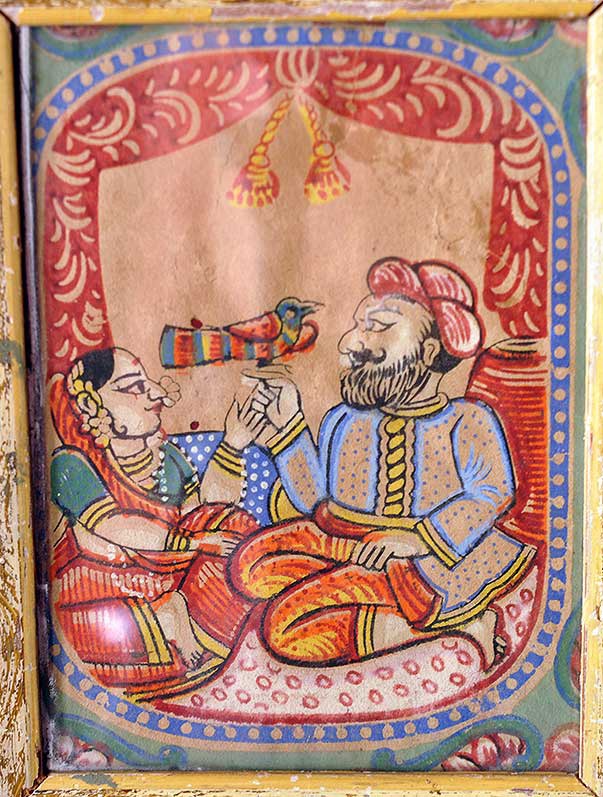
This small framed painting appears to be a traditional North Indian folk of miniature-style. The style is older, but many such paintings were produced late 19th to mid-20th century. It may have been found in an old affluent home or a haveli from Rajasthan or Gujarat. It depicts a romantic couple (likely a Raja and his Rani) sharing an intimate moment with a colorful parrot.
The man wears a turban and the woman wears a saree like dress. The parrot is a common symbol in Indian art. Often representing love, companionship, fidelity, and sometimes acting as a messenger between lovers. The painting displays bold, vibrant colors (reds, blues, greens, yellows) with simple shading. Ornate border with floral and geometric patterns, with draped curtain motif on the top side.
These are typically northern India style, known for romantic themes. Inspired by poetry, or possibly a folk variant influenced by Rajasthani or Mughal traditions. The man’s turban, beard, and dotted kurta, along with the woman’s sari and jewelry, suggest a historical or courtly Indian setting.
The couple interacts with a parrot, the bird may symbolize love, companionship, or leisure, common motifs in Indian art. The painting aligns closely with depictions in Pahari/Rajasthani schools. Given the style of the turban and the profile views, it is likely a folk-style miniature from Rajasthan.
The painting is done on paper using natural dyes or colors, and is mounted behind glass. Nevertheless, this can be considered a nostalgic piece of Indian folk art that is from the end of 19th to early 20th century.
Did you know – the traditional South Indian Kolam floor art, typically made with rice flour, is not just for decoration. The rice powder invites ants, birds, and other small creatures to eat. Symbolizing a peaceful coexistence with all living beings in one’s home and daily life.