19th Century Bhendi Bazaar In British Era Bombay, 1890 Photo
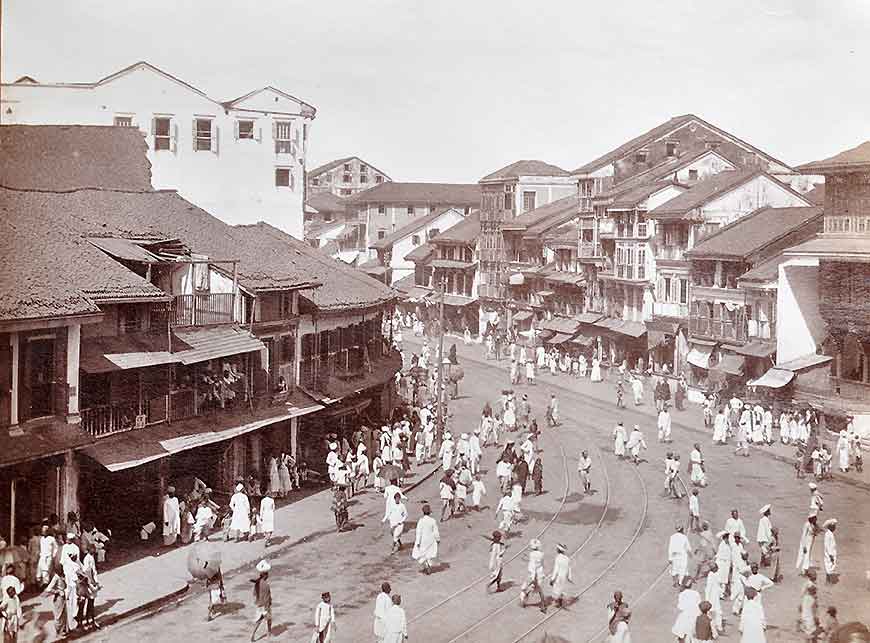
An 1890 photograph captures the vibrant streets of Bhendi Bazaar during the British era in Bombay (Mumbai). Bhendi Bazaar is historically classified as part of Bombay’s Native Town. The broader area outside the colonial Fort where local Indian populations and laborers were allowed to settle. Located in the heart of the city, Bhendi Bazaar emerged as a thriving marketplace where traders, craftsmen, shopkeepers, and migrants from across western India converged.
The image reveals a lively streetscape lined with traditional multi-storeyed buildings, wooden balconies, and bustling storefronts. People dressed in white fill the thoroughfare. One of the most dynamic commercial and residential quarters of colonial Bombay. Offering a glimpse into the diverse communities that shaped Bombay’s social fabric during the British period. The tram tracks visible on the road highlight the modernization of the city as public transport networks expanded rapidly in the late nineteenth and early twentieth centuries.
Bhendi Bazaar was a cultural crossroads where various Indian communities lived and traded side by side. The neighborhood reflected Bombay’s transformation into one of Asia’s greatest port cities. Unlike the grand colonial buildings of South Bombay, Bhendi Bazaar represented the everyday pulse of the city—crowded, energetic, and constantly evolving. Click image to enlarge.
Did you know – the name “Bhendi Bazaar” actually originated as a linguistic corruption. British residents living south of Crawford Market in the Fort area would refer to the region north of the market as “behind the bazaar,” which locals then adapted into “Bhendi Bazaar.”