
Portuguese Explorer Vasco Da Gama’s Encounter at Calicut, 1860 Illustrated Card

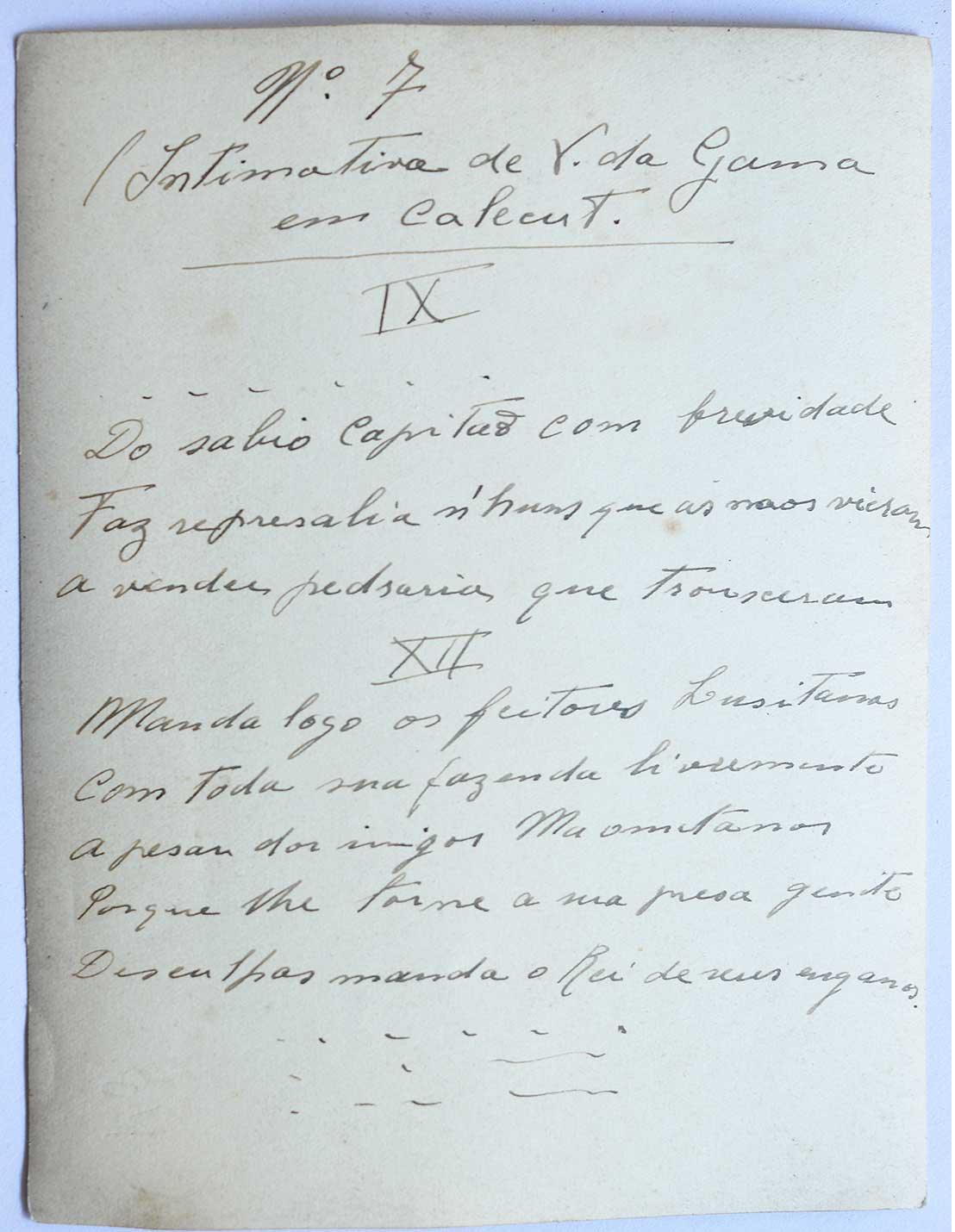
A rare 1860 print of Vasco Da Gama and his sailors clashing with Arab merchants on a Portuguese ship. This is in card format measuring 13.5 x 10.5 cm, and was typical of historical illustration cards issued in Europe around 1860-70. The card has Portuguese handwritten text on the back. The Arab merchants were in complete control of the spice trade until the arrival of the Portuguese.
The illustration shows: Portuguese sailors, cargo chests, a commander, likely Vasco Da Gama, giving orders, and a confrontation with locals and Arabs. When the Portuguese reached Calicut (Kozhikode) in 1498, trade negotiations broke down. Tensions escalated between Portuguese sailors and Arab merchants who controlled the spice trade.
Portuguese sailors punishing or seizing traders during a dispute at Calicut. According to the handwritten text on the back, this was after merchants refused to sell precious stones.
The arrival of Vasco da Gama at Calicut in May 1498 marked a turning point in global history. It opened a direct sea route between Europe and India. After a long voyage around the Cape of Good Hope, da Gama reached the Malabar Coast seeking spices and trade agreements. He was received by the ruler of Calicut, known as the Zamorin. The city was already a thriving center of international commerce dominated by Arab and Indian merchants. However, the Portuguese delegation brought relatively modest gifts, items such as cloth, hats, and coral. Which were considered unimpressive by the standards of Calicut’s wealthy trading elite. As a result, the Zamorin and his court reportedly viewed the Portuguese offerings with disdain and little enthusiasm.
The situation worsened when established Muslim merchants at the port, who controlled much of the spice trade, warned the Zamorin about the intentions of the newcomers. Their influence, combined with the unimpressive diplomatic gifts, meant that Vasco da Gama was not granted the full privileged trading arrangements he had hoped for. Although the Zamorin allowed limited trade interaction, the Portuguese expedition left Calicut without securing a significant commercial treaty. This early diplomatic setback did not end Portuguese ambitions in India. Instead, it marked the beginning of a long period of rivalry and conflict in the Indian Ocean spice trade. Vasco da Gama’s arrival at Calicut nevertheless remains one of the most significant moments in maritime history. It linked Europe directly with the rich markets of India and beyond. Click first image to enlarge.
Did you know- frustrated by his lack of success in trade, during his later visits, Da Gama behaved viciously. He bombarded the unfortified city of Calicut for two days.