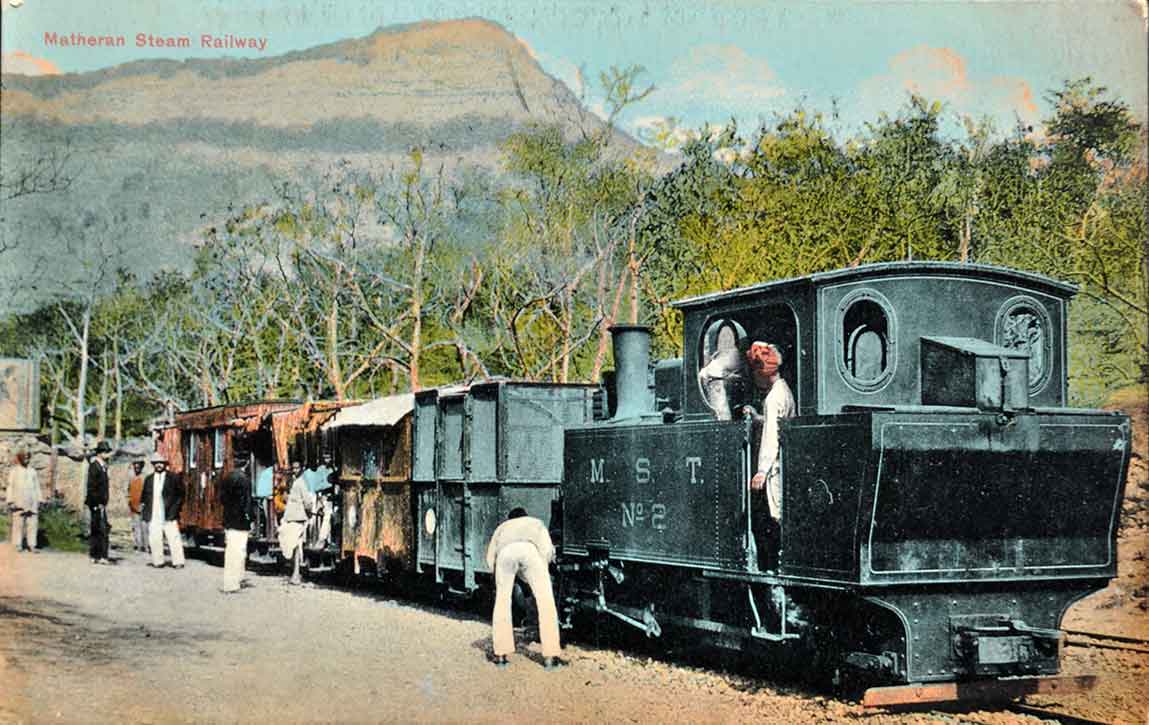
Toy Train Of Matheran Hill Station During The British Era, 1910 PC
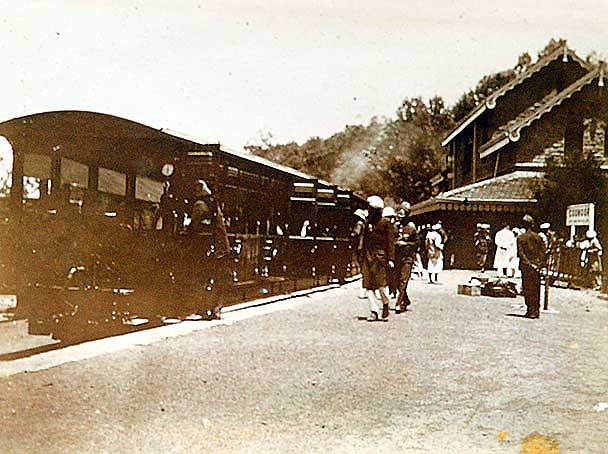
A 1907 postcard captures one of the most charming sights of colonial India—the Matheran Hill Station’s toy train. The toy train waits at a station at the foothills of the Western Ghats mountain range. Known today as the Matheran Hill Railway, this narrow-gauge line was conceived at the turn of the 20th century by Abdul Hussein Adamjee Peerbhoy. Financed by his father, Sir Adamjee Peerbhoy, a prominent Bombay (Mumbai) businessman and philanthropist.
Construction began in the early 1900s, and the railway was opened to traffic in 1907. Creating a vital link between Neral and the hill station of Matheran. Stretching for about 20 kilometres through steep gradients, dense forests, and sharp curves, the railway was a remarkable engineering achievement of its time. It remains one of India’s most beloved heritage railways.
During the British era, Matheran emerged as a popular retreat from the heat and bustle of Bombay (Mumbai). First developed as a hill station in the mid-19th century. It attracted British officials, wealthy merchants, and Indian elites seeking cooler weather and scenic surroundings. Even today, Matheran retains much of its old-world character, with motor vehicles largely prohibited within the town limits. The historic toy train continues to be one of the area’s greatest attractions, offering passengers a leisurely journey through forests, valleys, and spectacular Western Ghats landscapes that have captivated travellers for more than a century. Click image to enlarge.
Did you know – Sir Adamjee Peerbhoy, a cotton magnate and philanthropist, started life in abject poverty selling matches on the streets of Bombay.