
Boat Mail Train Runs On The New Pamban Bridge, 2 Photos 1914

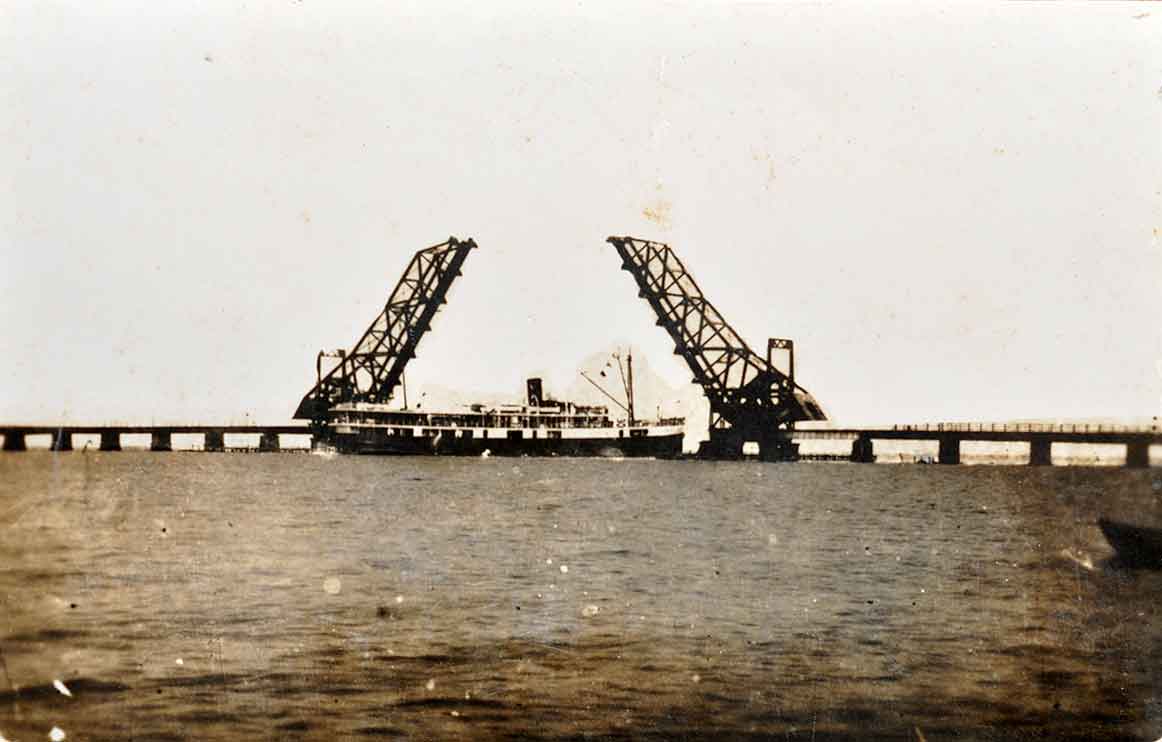
Rare 1910s photographs of the Boat Mail Train running on the new Pamban Railway Bridge. The first image is believed to be the inaugural run of the Boat Mail Train or the Indo-Ceylon Express Train after the opening of the new Pamban Railway Bridge.
Formerly named the “Scherzer Rolling Lift Bridge”, later renamed to “Annai Indira Gandhi Bridge”. However, popularly known as the Pamban Railway Bridge. It is India’s first rail-sea bridge, constructed in such a manner that it allows ships to pass through by raising its split cantilever spans, see images above. Built on the Palk Strait, it connects mainland India to Rameshwaram Island and then to Dhanushkodi.
The boat mail began its first service in 1914 after the completion of the Pamban Bridge. The train begins its journey from the Egmore Station (Chennai) to Rameshwaram and then continues to Dhanushkodi. A waiting ship ferries the passengers to Talaimannar on the Ceylon (Sri Lanka) side.
It was at one time in the late 19th century that the train was up to Tuticorin only; passengers had to then catch a ship to cross over to Ceylon. The journey was considered longer and more tedious; it was discontinued after the new proposed route came into existence. In 1964, giant waves from a huge cyclone hit the bridge. Along with it, the Boat Mail Train running on the bridge at the time was swept away, killing several people. Later, the train was terminated at Rameshwaram.
See more on Dhanushkodi.
Did you know – the service existed primarily to ferry Tamil labourers to the Sri Lanka side to work for the tea and plantation estates, since Sri Lanka had a shortage of workers.